Relic point Vietnam
Việt Nam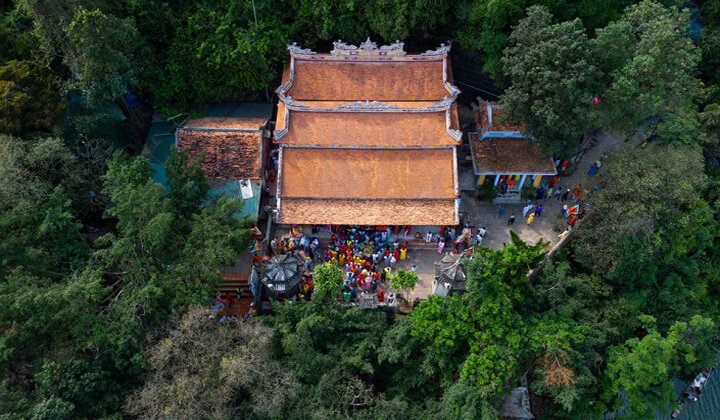
Hon Chen Palace
Hon Chen Palace is where in the past, Champa people worshiped the goddess Po Nagar. Afterwards, Vietnamese people who followed the Thien Tien Thanh religion continued to worship her under the name of Holy Mother Thien Y A Na. In addition, at Hon Chen Palace, Buddha, Thanh Quan Cong and more than 100 saints who are disciples of the above gods are worshiped. Hon Chen Palace is known to many people not because it is a religious relic but rather because it is a place with lovely architectural works and picturesque scenery. Hon Chen Palace was built on Ngoc Tran mountain, a mountain with lush vegetation, hanging on the edge of an abyss, which is the deepest part of the Perfume River. On the top of the mountain there is a depression, several meters in diameter, surrounded by a ring of rocks built like a well. Whenever it rains, water condenses, looking like a bowl of clear water, so this mountain is also called by the people. is Hon Chen. About 10 lovely architectural works of the Palace are located halfway up the gentle southeast slope of the mountain, hidden in the shade of an ancient forest with lush foliage. The system of steps runs from the Palace to the water wharf (Huong River). The architectural plan of the entire Palace is not large, including the main shrine Minh Kinh Dai in the middle, on the right is the Quan Cu house, Trinh Cat Vien, Thanh Pagoda, on the right is the Ngu Vi Thanh Ba palace, the altar of mandarins, The cave worships Mr. Ha Ban (ie Mr. Ho), Ngoai Canh temple. Below the riverbank, at the end of the street on the left is Thuy Phu hermitage. On that architectural surface, there are also a number of altars and small shrines. Hon Chen Palace has been recognized as a national relic according to Decision No. 2009/1998/Ministry of Culture and Sports, dated September 26, 1998 of the Ministry of Culture and Information. Source: Thua Thien Hue Electronic Information Portal.
Hue 3003 view
Pho Quang Pagoda
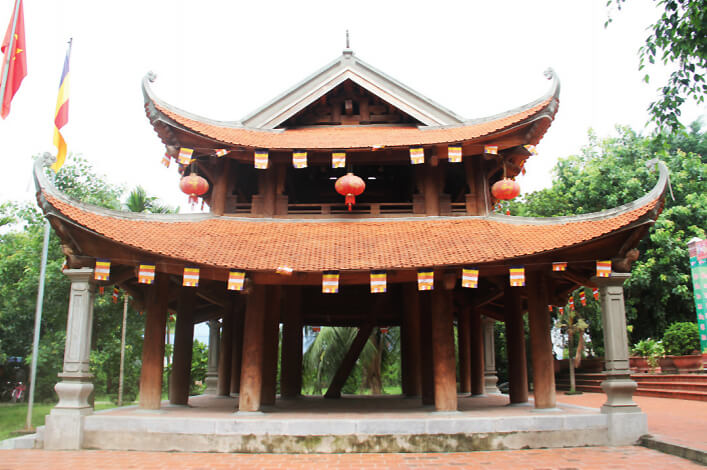
Pho Quang Tu complex includes basic architectural works: Three gates - Bell tower, writer's house, Pho Quang pagoda, stele house, Patriarch's house. The three-entrance gate - the bell tower at the pagoda still preserves the ancient architecture in Phu Tho province, with a 2-storey, 8-roof roof system, elegant curved blades, and a roof shaped like a rolling water dragon. Thuong Luong is engraved with Chinese characters: "Hoang Trieu Minh Mang for two decades" (i.e. Minh Mang's 12th year - 1839), the ends are carved in the shape of a lotus flower. On the bell tower hangs the bronze bell "Pho Quang Tu Chung" and the bronze bell are both dated to the 20th year of Minh Mang - 1839. The book Vietnamese Sino-Nom Inscriptions (Hanoi, 1993) summarizes the content of the engraving. on two stone steles at the temple. A stele created in 1628 said that the pagoda was a famous ancient temple that was damaged, so in 1626, the Tin mandarins, Phu Xuyen marquis Nguyen Hieu Dung, Nguyen Van Vi and about 70 guild masters revived the founder. Organizing the restoration of the upper palaces, burning incense, front hall, rear hall, three gates... A stele created in 1634, engraved with the poem Tang Luat 8 lines by Pham Su Manh in 1377 talks about going on tours in this area. Pho Quang Pagoda was built in the style of the letter "Cong", tiled, and has two levels. The upper level pagoda is 10m high, 7m long, has three compartments, and has an entrance door from the Patriarch's house to the pagoda. The lower level pagoda is 16m wide and 13.5m long, including 5 compartments. Pillar stones come in square and octagonal types with decorations similar to that of a leaf. In the middle of the pagoda there is a great painting and two parallel sentences. Pho Quang Tu has architecture in the style of early planting and simple sculpture. The Three Jewels Court includes: Worshiping Hall, Incense Burning and Main Hall. The wooden structural frame with the roof rafters is made in the style of "Gongs are high, gongs are stacked - beams are lowered". Xuan Lung Pagoda currently holds more than 30 statues made of wood and earth, arranged on pedestals. SOURCE: Department of Tourism of Lao Cai province
Phu Tho 3497 view
Xa Loc Temple
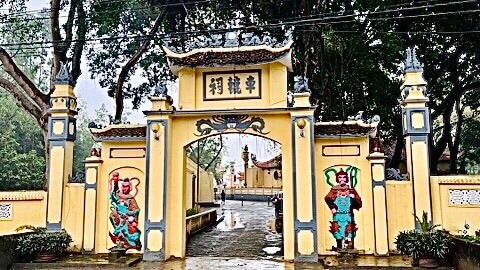
After more than 700 years of ups and downs, Xa Loc temple (Tu Xa, Lam Thao, Phu Tho, Vietnam) still retains its inherent value, a place for people near and far to express gratitude for their sacrifices and kindness. The benevolence and patriotism of the brave general Lan Ho Hau - Governor of the Great King. In 1991, Xa Loc Temple was ranked a National Historical Monument by the Ministry of Culture, Sports and Tourism. Today, along with preserving and preserving artifacts in the temple, the local government has actively mobilized social capital to continue repairing and embellishing the temple, promoting its great spiritual significance. not only to the people of Tu Xa commune but also demonstrates the nation's moral principle of "when drinking water, remember its source". Xa Loc Temple's architecture is considered typical of the architectural art of worship in the province. The temple was built in the style of Nhi, including Dai Bai and Thuong Cung. The back of the Temple is based on the position of King Hung's Ancestor Temple on Nghia Linh Mountain, the Temple faces South, surrounded by daffodils. Dai Bai house has 3 rooms, for gongs, drums, worshiping horses, and worshiping chambers with swords, knives, and spears painted in red and gold. This is also a place to worship the souls of martyrs who died in battles to protect their homeland. Inside Dai Bai is the Upper Palace worshiping the god Lan Ho and worshiping Phung Sao Stone and Phung Sao Den - two talented subordinates of the god Lan Ho. On the left and right sides are houses built with simple architecture, three rooms for relatives, villagers, and tourists from all over to prepare for the ceremony to enter the temple to burn incense. What impresses everyone when coming to Xa Loc Temple is that the grounds inside the temple are covered with ancient trees, creating shade and fresh air. In 2017, the Temple was expanded to a campus of more than 1 hectare, with a lotus pond and three-entrance gate, creating a majestic and beautiful look for the temple. SOURCE: PHU THO NEWSPAPER
Phu Tho 3490 view
Phu Van Lau
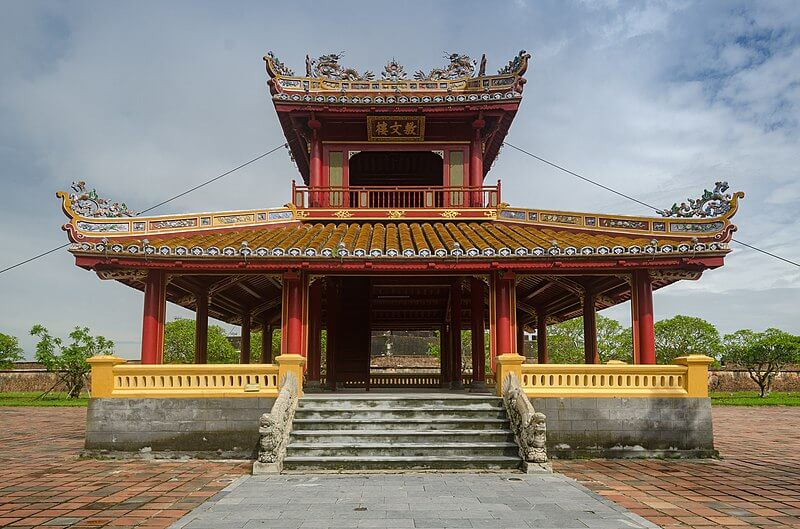
Phu Van Lau is located near the northern bank of the Perfume River, on the strip of land running across the front of the Imperial City and right on the main axis of the architectural complex of Hue ancient capital: Thai Hoa Palace, Ngo Mon, Ky Dai, Phu Van Lau, Nghinh. Luong Dinh, Huong Giang, Ngu Binh. This building was used as a place to post documents that the Nguyen court needed to announce to the people about the king's decrees or the results of the Association and Dinh competitions. In addition, this is also where the royal court organizes national celebrations with the presence of the king, courtiers and people. At the former location of Phu Van Lau, the court (early in the reign of King Gia Long) built a relatively small architectural work, named Bang Dinh (Table Hanging Pavilion). In 1819, also under the reign of King Gia Long, it was replaced by a two-story building and renamed Phu Van Lau. In 1843, King Thieu Tri built a stele on the right side of the building to engrave the poem "Huong Giang understands gossip" (Early boating on the Perfume River). During nearly 190 years of existence, Phu Van Lau was restored about 10 times, the earliest time was in 1905 (after the storm in the year of the Dragon, 1904, Phu Van Lau was seriously damaged), the most recent time was in 1994, 1995. After many restorations, nothing has changed significantly in terms of architectural structure. Phu Van Lau is a 11.67m high building, the roof is covered with yellow glazed tube tiles (royal lapis lazuli), the building has 16 columns painted dark red (4 main columns throughout both floors, 12 military columns), There is a railing system surrounding it, the space downstairs is completely empty. On the second floor, all four sides are built with panels, in the style of silk picture frames, with round windows on both sides, wooden railings on the outside, and on the front window there is a gilded lacquered horizontal panel, decorated with stylized leaf strings. "two dragons and moon". During the 1974 renovation, some wooden structures such as columns, trusses, and transoms were replaced with reinforced cement. Phu Van Lau is a beautiful visual work of the Nguyen Dynasty, a unique heritage in the ancient capital's architectural complex. Source: Thua Thien Hue Electronic Information Portal.
Hue 2809 view
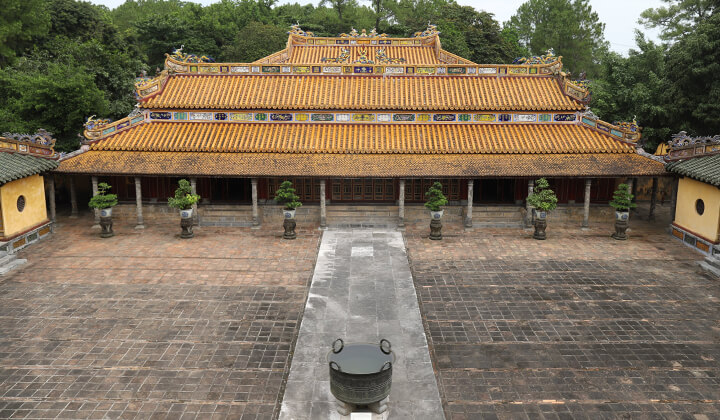
Dong Khanh Tomb (Tu Lang)
Dong Khanh Tomb (Tu Lang) was built on the land of Cu Si village, now Thuong Hai village, Thuy Xuan ward, Hue city. After ascending the throne (February 1888), King Dong Khanh built a palace named Truy Tu next to his father's tomb to worship his father. While the work was underway, King Dong Khanh fell ill and suddenly passed away. King Thanh Thai succeeded him and changed the name of Truy Tu Palace to Ngung Hy to worship King Dong Khanh. The king's body was simply buried on a hill called Ho Thuan Son, 30m west of Ngung Hy Palace. The entire mausoleum area is called Tu Mausoleum. In 1916, King Dong Khanh's son ascended the throne (King Khai Dinh) and repaired the temple and built a mausoleum for his father. The entire mausoleum area from Bai Dinh, Bi Dinh to Buu Thanh and Huyen Cung were built under Khai Dinh's reign. It was not until July 1917 that the basic part was completed and it was completed in 1923. The process of building Dong Khanh mausoleum took place over four kings (1888-1923), so Dong Khanh mausoleum bears the mark of two architectural schools of two different historical times. Palace impregnation area: the buildings still carry the ancient architectural style of "overlapping thiem thiem snail". The main hall and its dependent houses are still splendidly painted and gilded columns decorated with four sacred animals, four precious animals, etc. Ngung Hy palace has 24 drawings of paintings in the classic "Twenty-four filial piety". On the match necks, the roof, and the edge of Ngung Hy Palace, terracotta reliefs with rustic decorations such as "Fisherman's gain" and "Fighting cocks" appear. However, the appearance of a system of multi-colored glass windows and two paintings depicting the Franco-Prussian war during Napoleon's time and a number of other artifacts demonstrate the influence of Western European culture. Mausoleum area: Tomb architecture is almost completely "Europeanized" from architecture, decoration to construction materials. The stele house is a variation of Romance architecture mixed with Asian architecture. Tall, thin statues of mandarins are made of cement and bricks instead of stone statues, bad toa tiles, and checkered bricks. In general, Dong Khanh mausoleum opened the architectural period of mixing Europe, Asia, and Neo-Ancient times. The project is recognized as a national monument (art architectural type) according to Decision No. 2009/1998-Decision/Ministry of Culture and Sports dated September 26, 1998 of the Ministry of Culture and Information. Source: Thua Thien Hue Electronic Information Portal.
Hue 2800 view
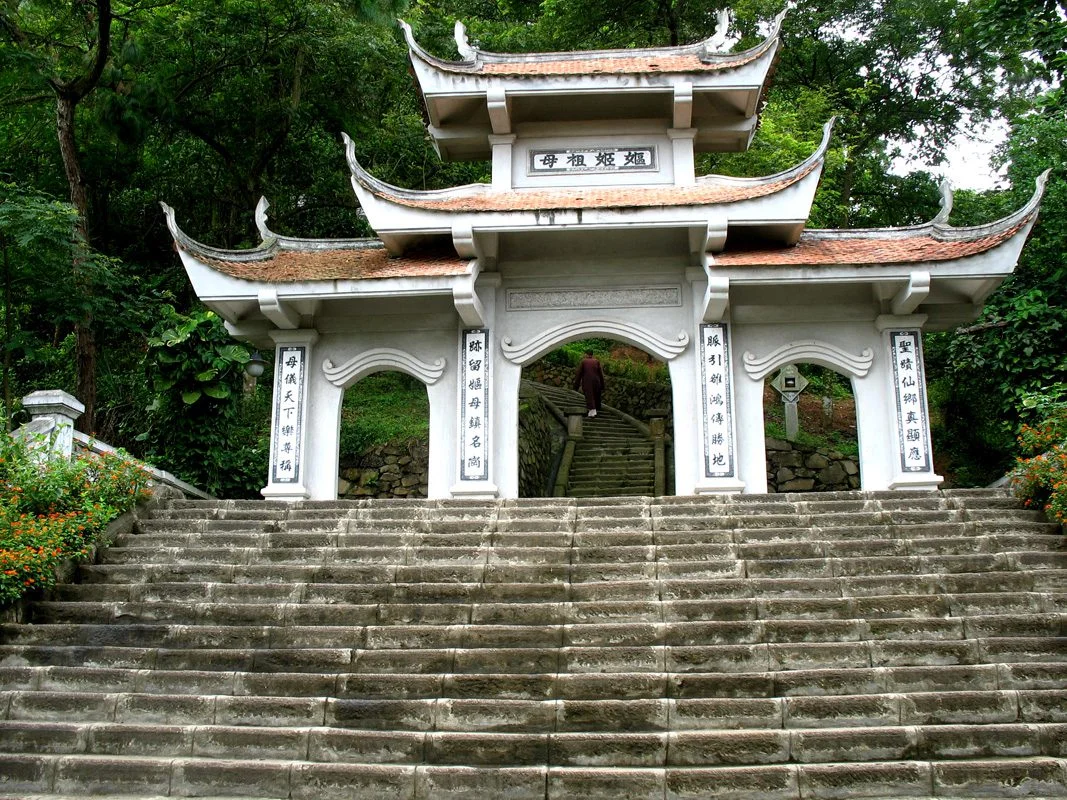
Au Co Mother Goddess Temple
Mother Goddess Au Co Temple, Hien Luong commune, Ha Hoa district, Phu Tho province is a place to worship Mother Goddess Au Co. For a long time, in the minds of all Vietnamese people, Au Co Mother Temple associated with the belief of worshiping Mother Au Co has become a beauty in the cultural essence of the Vietnamese people, a sacred symbol of the origin of Lac children and grandchildren. Hong of all Vietnamese people. During the integration period, researching the value of Au Co Mau Temple associated with developing spiritual tourism about national roots is the direction to preserve and promote the multifaceted value of the heritage. From the center of Viet Tri city, following the Noi Bai - Lao Cai highway for just over an hour, visitors will arrive at Au Co Temple Relic Area, Hien Luong commune, Ha Hoa district. Coming here, every Vietnamese person will not only have peaceful moments, but also be immersed in the legendary space of the image of mother Au Co giving birth to Lac and Hong of Vietnam in a bag of hundreds of eggs. This image has become an immortal image that lives forever in the thoughts, emotions and minds of generations of Vietnamese people. Legend has it that Au Co is a "fairy who descended to earth", not only is she very beautiful, "can speak more than flowers, and is more fragrant than jade", but she also reads carefully, is good at playing the flute, and is fluent in pronunciation. Therefore, she is often called "The First Princess". After marrying Lac Long Quan - son of Kinh Duong Vuong, Au Co gave birth to a sac of a hundred eggs, which hatched into a hundred children. One day, seeing that his children had grown up, Lac Long Quan said to Au Co: "I am a Dragon, you are a Fairy. Although yin and yang come together to form a hundred children, union is difficult because of different lineages. ”. Having said that, he divided 50 people to follow their mother up the mountain and 50 people to follow their father down to the sea, dividing the country to rule for a long time. SOURCE: PHU THO NEWSPAPER
Phu Tho 3393 view
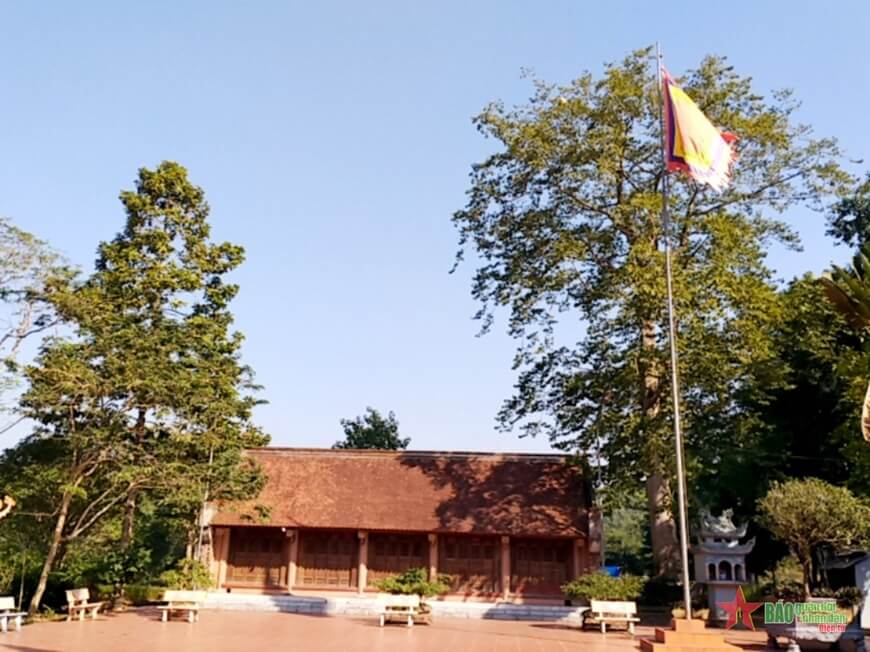
Chu Hung Temple
Chu Hung Temple Festival in Am Ha commune, Ha Hoa district is closely associated with the formation and development of the Chu Hung Temple national historical site. This is the place to worship Con Nhac Dai Vuong - the person who had the merit of fighting the enemy to protect the country and region of Chu Hung during the period of the 18th Hung King - Hung Due Vuong. The people of Chu Hung expressed their respect for Con Nhac Dai Vuong, so they submitted a request to King Gia Long to build a temple to worship him with incense smoke forever. In July 1806, King Gia Long officially approved the people of Chu Hung to start construction of the temple, located in the terrain of a sacred land, on the top of Quy Son mountain, far away from the temple gate is Kim mountain peak. Turtle - Golden Turtle. Since then, every Tet holiday, Am Ha people in particular and Ha Hoa people in general organize incense burning ceremonies to pay homage to the deity and open the village festival on January 7 every year. . SOURCE: PHU THO NEWSPAPER
Phu Tho 3375 view
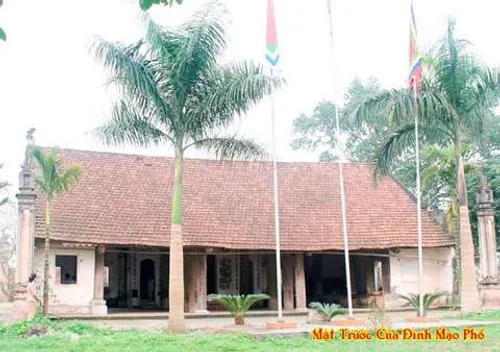
Mao Pho temple
Mao Pho village communal house still preserves many precious and valuable artifacts such as 6 ordinations, altars, palanquins, wooden dragon and phoenix carvings dating from the late Le and early Nguyen... Every year, on 4 occasions During the festival, the villagers organize the festival with sacrifices, palanquin processions and special folk games. Mao Pho Temple was recognized as a national historical, cultural and architectural relic in 1993. Mao Pho communal house relic area was built in the Later Le period with an architectural scale divided into 2 parts: communal house and temple. The communal house and temple are located on a large, flat area of land with beautiful natural landscape, facing east overlooking the beach on the banks of Thao River. Currently, the old communal house has been repaired by the people of Mao Pho village, raising the entire communal house architecture to make it more dignified, spacious, and more worthy of the stature of the gods. here. Lady Mao Pho Temple is a place to worship Saint Mother Duyen Hoa, previously established in a separate place. During the construction of the dike road passing through the village, the old temple was moved to a new place in the same campus as the communal house and village temple. In the temple, there is still a statue of the sacred and majestic Holy Mother. Not only were the temples and shrines rebuilt by Mao Pho people to make them more dignified, but on this occasion, thanks to a rare fate, the content of the previously lost Mao Pho village genealogy was brought back to the correct place of worship. its. With the omen of the Phoenix bird holding a jade pen, it flew to the sound of thunder when the Great Kings of Pen Loi Mao were born, allowing contact with the Phoenix family to follow Tien Au Co's mother up the mountain, creating bronze drums that echoed like the sound of the sound. Thunder, on which is engraved the image of a person wearing fur, is the name of the nation that has existed since the time of Hung King. SOURCE: Bach Viet overlaps nine
Phu Tho 3536 view
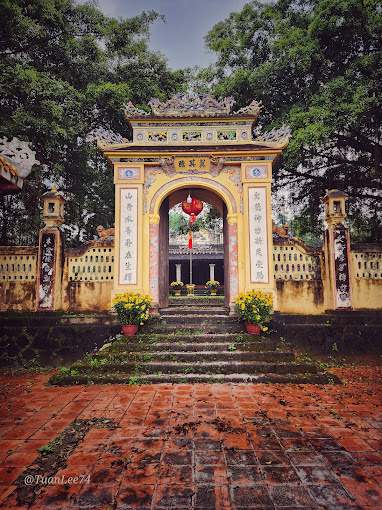
Ha Thuong ancient village communal house
Ha Thuong village communal house is located to the east of Ha Thuong village, Gio Linh town, Gio Linh district, Quang Tri province; Less than 1 km east of Highway 1A and about 800m north of Highway 75B. The communal house has an area of 8,450 square meters, located in a prime location, leaning against the village, facing a large lake and rich fields. Far away in front of the communal house is a strip of land as high as a screen. This location is suitable for Vietnamese feng shui. According to archival documents, Ha Thuong communal house was built in the 11th year of Chinh Hoa (1690). By the 15th year of Thanh Thai (1903), the communal house was greatly restored and a number of other structures were built such as gates and city walls. The method of using brick walls and cement columns was applied. The system of columns and porch columns was replaced by mortared and decorated brick pillars. A wall system has also been built around the two vestibules... The entire campus includes a great communal house and 4 temples worshiping 4 gods: Temple worshiping the Tutelary God, two temples worshiping two pioneers named Le and them. Nguyen, a temple worshiping Mr. Le Hieu. The structure of the load-bearing wooden frame is made according to the model of a 3-compartment, 2-wing house, distributed in 6 rows of columns. On tiled roofs, straight roofs, moderate slope; The edge of the roof, the edge of the sword, and the tip of the knife are decorated with decorative panels of dragons flanking the moon, delivering words, and delivering leaves using the art of plastering and assembling pieces of porcelain. The inside of the communal house is divided into two parts. The front hall includes the space of the front wing and two outer spaces used as a place for cultural activities, meetings, and dining. The back office includes the space of the back wing and an inner room used as a place of worship and sacrifice. The gate system and walls in front of the communal house are built of bricks and cement; The foundation is quite high and is built of basalt. The temples within the communal house of Ha Thuong village all have closed gates and walls. Structured in the style of a ruong house with one compartment and two wings, the temples all have a mezzanine shape based on four main columns of a wooden frame, functioning as altars. With this construction style, Ha Thuong communal house is considered the only remaining typical product representing the communal house architecture of the Central region in the 17th century. This is the communal house that, according to historical and fine arts researchers, is the oldest remaining in the village communal house relic system in Quang Tri with the most unique architecture in the Central region; This is also the place where the first Communist Party cell of Do Linh district - Cho Cau Party cell was established. With historical and architectural values, Ha Thuong ancient village communal house was recognized as a national monument in 1991. Source: Electronic information portal of Gio Linh district, Quang Tri province
Quang Tri 3382 view
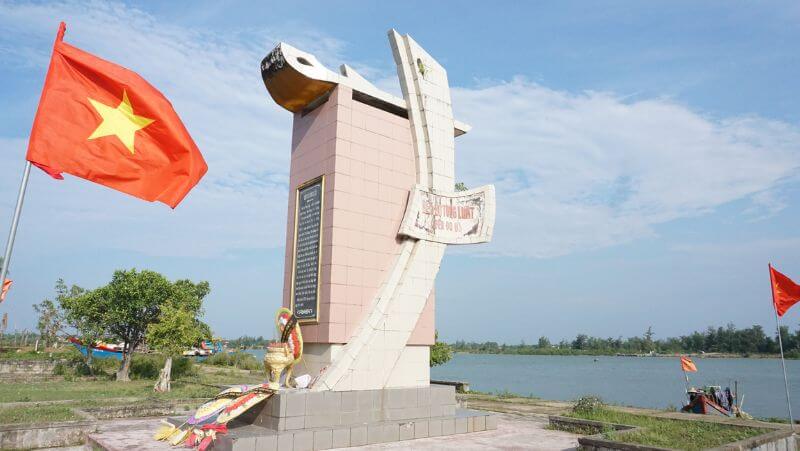
Tung Luat Wharf Relic (Wharf B)
Tung Luat wharf is one of the particularly famous historical relics, making an important contribution to our people's fight against the French. On January 6, 1950, right at the wharf, Regiment 95 and Company 354 crossed the river and defeated the French at Cua Tung station. Thereby affirming the strength, stubborn fighting will and fighting spirit for national liberation of our army and people. Under the leadership of the Party, the army and people of the eastern communes of Vinh Linh and Gio Linh joined forces to destroy the raids of the French enemy, eliminating hundreds of French soldiers and puppets from combat, destroying many military vehicles. their modernity. Tung Luat wharf has completed its historic mission, serving as a bridge between the North and South banks, contributing together with the people of the country to defeat the invasion plot of the French colonialists. On July 21, 1954, the Geneva Agreement was signed, it seemed that the country would enjoy peace and independence, however, Tung Luat wharf had to enter pages of history filled with blood and tears. The anti-American and puppet history of Tung Luat wharf began with night ferry trips, secretly bringing soldiers and military intelligence officers to the South to operate in the years 1956-1965. On those boats, there was a special guest secretly welcomed across the river, First Secretary Le Duan. Having suffered bitter defeats by the Saigon puppet government against the revolutionary movement in the South, American troops directly participated in the war. Tung Luat wharf once again became the focus of the battle between justice and brutality. With the code name "B ferry", Tung Luat ferry is a bridge connecting the north and south banks of Hien Luong river, one of the starting points of the Ho Chi Minh road on the sea, the starting point of the only traffic route. connecting the mainland with the heroic Con Co island. Tung Luat Village Militia Company was established with 110 soldiers, with the task of protecting the wharf, transporting soldiers, militiamen, firemen, and food, weapons, and ammunition. Ferry station B transports fire brigades of communes: Vinh Long, Vinh Tan, Vinh Trung, Vinh Tu, Vinh Thanh, Vinh Hoa... across the river to the South to serve the attack on hill bases 31, 28 , Quan Ngang, Cua Viet. Also during this fierce war, B Tung Luat Ferry Station was assigned the additional task of transporting and evacuating people in the southern area of Ben Hai River to the North. B Tung Luat ferry station can transport nearly 1.4 million soldiers, militiamen, and civilians across the fire line. This same wharf was the starting point of Company 22, a suicide unit transporting weapons, ammunition, medicine, and food to Con Co Island, which was blockaded by the US Navy and the Saigon government. Every night, when there are storms and rough seas, each boat carries a squad of militiamen who are remembered alive before boarding the boat to the island. The militiamen, who were originally gentle fishermen, suddenly became soldiers, ready to let "The waves call our souls back to the small island". With wooden boats and bamboo boats sailing and rowing through the night at times of rough seas, from 1965 to 1972, Company 22 transported thousands of tons of ammunition, weapons, food, and supplies to Con Co Island, contributing to maintaining the Fatherland's outpost in the East Sea. Ferry station B was the most impermanent point of life and death in the country during the war against America and national salvation. Countless children of Tung Luat land and many other rural areas of the country have stayed here with blood and bones mixed with Hien Luong River water and sand and mud of this river bottom. Thanks to the great contributions in the two wars against the French and the Americans to save the country, in 1996, the Tung Luat wharf historical relic was recognized and ranked by our state as a national historical relic. To engrave the achievements of the army and people who fought and sacrificed heroically, at this wharf the monument of wharf B was built. The monument was built on an area of about 100m2. However, according to historical witnesses and researchers, the scale of the monument's structure and soul are not really commensurate with the great feats of our army and people, especially the sacrifices of so many people. soldiers on this land. Therefore, the officers and people of Tung Luat village, the people of Vinh Giang, Vinh Linh and soldiers from many parts of the country who fought here, those who have children, and children who have stayed here, very much wish and recommend. Recommend local authorities and authorities of Quang Tri province to soon research, renovate and upgrade the historical relic of B Tung Luat wharf to match the heroic historical achievements of this place. Source: Quang Tri province electronic information portal
Quang Tri 3410 view