Relic point Vietnam
Việt Nam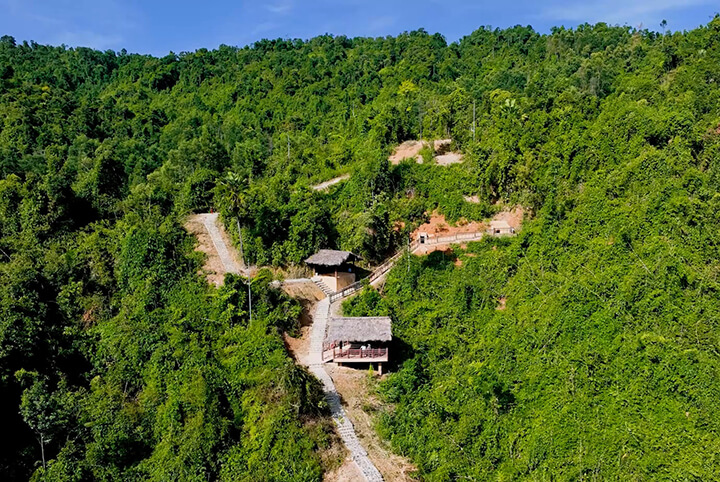
Tunnels of Tri Thien Hue Party Committee
Tri Thien Hue Party Committee Tunnels are located in the Khe Trai area, Huong Van ward, Huong Tra town, Thua Thien Hue province, about 25 km northwest of Hue city. During the resistance war against the US to save the country, the Tri Thien battlefield in general and Thua Thien Hue in particular were always hot spots. In mid-1967, our position and strength on the battlefield developed strongly. Grasping the opportunity, the Thua Thien Hue Provincial Party Committee advocates directing localities in the province, especially Hue city, to break the grip and develop revolutionary bases in the enemy's heart to create conditions for military and political activities. expanding the liberated area, gradually strengthening the direction of building revolutionary bases in adjacent areas and the tunnels of the Tri Thien Hue Party Committee were born in that situation. In August 1967, the tunnel began construction under the direct direction of comrade Tu Minh - Deputy Secretary of the Regional Party Committee, Secretary of the Hue City Party Committee, commanding the front, and comrade Dang Kinh - Deputy Commander of the military region. Standing member of the Regional Party Committee. The main force is the police protection team. The tunnel is the headquarters of the Tri Thien Party Committee, the Hue City Party Committee, directing all activities of the liberation army forces before and after the spring attack in 1968. In addition to its responsibility as the supreme command body in battle, Tri Thien Hue School, is also a bridge connecting the strategic intentions of the Party Central Committee and the Ministry of National Defense. At the tunnels, many important meetings took place to reach the right decisions, greatly contributing to the success of the Spring 68 campaign in Thua Thien Hue, along with victories on the battlefield. fatally forced the US imperialists and their lackeys to sit at the negotiating table in Paris. The historic victory of the Mau Than spring of 1968 delighted the country's compatriots and international friends, with the worthy contributions of the heroic Tri Thien Hue army and people. With the noble title awarded by the Party and State: "Attack, uprising, heroic, resilient". The tunnels of the Tri Thien Party Committee are eloquent evidence of strength, the people's war posture is a high-level promotion of the strength of three types of troops, in all three strategic regions, enriching the treasure of military theory. Vietnam, the art of people's war of our army. The war has passed but those valuable lessons are still valid... The Tri Thien Hue Party Committee Zone Tunnel Relic was recognized by the Ministry of Culture and Information as a national historical relic in Decision No. 310-Quyet/Ministry of Culture and Sports dated February 13, 1996. With tradition , the nation's ethic of drinking water, remembering its source, the tunnels of the Party Committee were invested in by the State to restore and renovate to be worthy of the historical value and stature of a national monument, becoming an attractive tourist destination. guide, serve domestic and international visitors. Source: Thua Thien Hue Electronic Information Portal.
Hue 3264 view
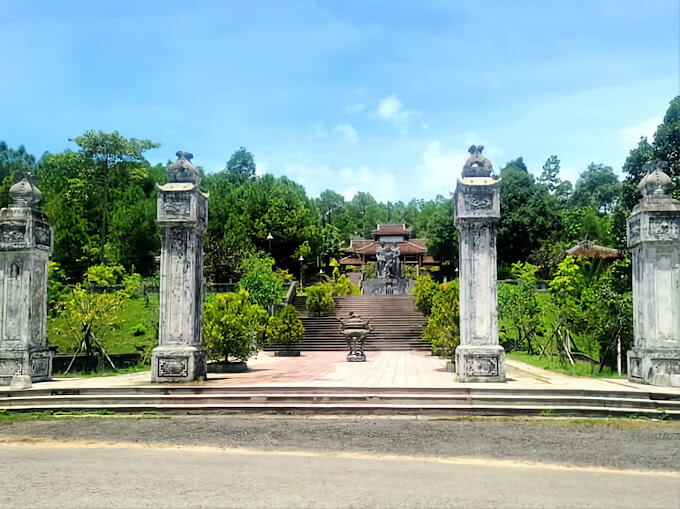
Nine Tunnels Historical Relic Area
Chin Ham relic site is located on the slopes of Thien Thai mountain, in Ngu Tay village, Thuy An commune (now An Tay ward), Hue city. The former Nine Ham Area (1941) was built by the French colonialists as a weapons warehouse. In 1945, after the Japanese coup d'etat over France (March 9, 1945), the Japanese fascists took all the weapons here, the Chin Ham area was left vacant. Under the Ngo Dinh Diem government, Ngo Dinh Can, as "Lord of the Central Region", converted Chin Ham into a place to imprison revolutionary soldiers and patriots. From here, Chin Ham Prison is associated with the barbaric crimes that the Ngo family committed against our people. These tunnels were converted by Ngo Dinh Can into semi-submerged, semi-floating rectangular concrete blocks. Among these, dungeon number 7 is a typical dungeon system. Can had them converted into tiger cage-style cells that could only fit one person (1.8m x 1.8m x 1.8m), under the hands of tyrant Ngo Dinh Can, using no means to subdued the revolutionary will and patriotic spirit of the soldiers. Their crimes are encapsulated in more than three thousand verses in the poetry collection "Living in the Grave" by author Nguyen Dan Trung (Nguyen Minh Van), a witness who survived from Nine Ham Prison, the real poetry collection. is a denunciation of the crimes of the Ngo family group, touching many people. It is a tribute to the loyal communist soldiers who devoted their lives to the Party, to the people, and to the cause of national liberation. A shining example for everyone to study. To commemorate the communist soldiers and patriots who fell at Chin Ham, and also to mark the crimes of the enemy, on December 16, 1993, the Ministry of Culture and Sports issued Decision No. 2015 -Decision/Ministry of Culture, Sports and Tourism recognizing Chin Ham relic as a national historical and cultural relic. Source: Thua Thien Hue Electronic Information Portal.
Hue 3756 view
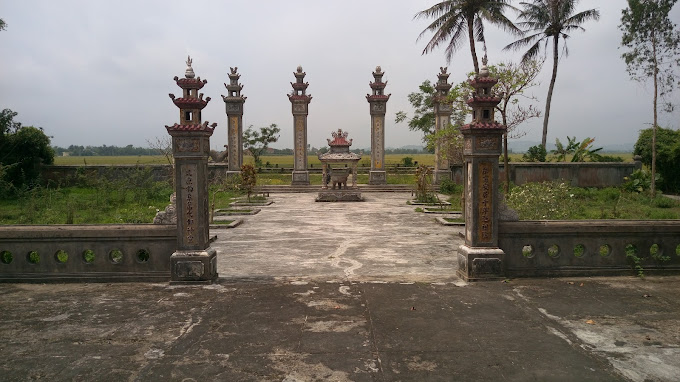
Van The Village Communal House
Location: About 9km southeast of Hue city center, Van The communal house is located in Thuy Thanh commune, Huong Thuy town, Thua Thien Hue province. Located in the center of the village on an area of 7 acres, behind is the Nhu Y canal (which King Gia Long dug in 1806) facing the endless Truong Son range. Just as ordinary and simple as many other communal houses in Vietnamese villages, Van The village communal house is a sacred place, a gathering place to express the wishes, determination, and solidarity of the people of hundreds of families, in the face of challenges. An important event of the homeland and the country, at the same time, it is also the place to best preserve and preserve traditions and national cultural identity, despite the cultural pressures introduced from outside. With a heroic past, especially during the two resistance wars against the French colonialists and the American imperialists, Van The communal house has become the revolutionary cradle of Huong Thuy district, a historical place of the province. Currently, the monument has invested in restoring and repairing a number of items, so that the monument is increasingly perfect. Van The communal house historical relic has been recognized as a national relic by Decision No. 985/Quyet Dinh-Van Hoa dated May 7, 1997. Source: Thua Thien Hue Electronic Information Portal.
Hue 3708 view
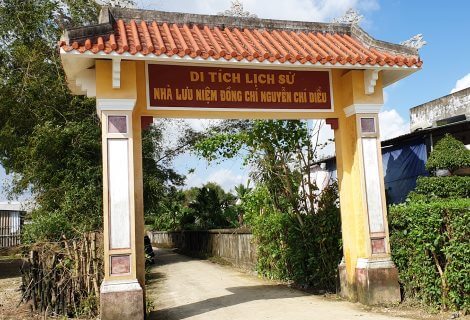
Comrade Nguyen Chi Dieu Memorial House
Comrade Nguyen Chi Dieu (1908-1939) was from Thanh Tien village, Phu Mau commune, Hue city, Thua Thien Hue province. He is a revolutionary activist and an elite member of the Party who has made many contributions to the cause of national liberation and unification. From 1925 to 1927, he actively participated in the strike movement, the movement to demand amnesty for Mr. Phan Boi Chau and mourn for Mr. Phan Chau Trinh while he was a student at Hue Quoc Hoc School. Here, he joined the Tan Viet Party. In 1928, Nguyen Chi Dieu was a member of the Tan Viet Revolutionary Party's Central Committee. In 1929, he was sent to Saigon to operate. On February 3, 1930, the Communist Party of Vietnam was established, comrade Nguyen Chi Dieu became one of the first leaders of the Saigon - Cho Lon City Party Committee, then became Secretary of the Gia Dinh Provincial Party Committee. . In October 1930, he was arrested by the French colonialists in Saigon prison, sentenced to hard labor for life and exiled to Con Dao. In June 1936, he was pardoned and returned to the mainland, continuing his revolutionary activities and participating in the Party Central Committee, in charge of the Central region. In 1939, due to a serious illness, comrade Nguyen Chi Dieu passed away, and was buried at the cemetery named Phan Boi Chau (No. 5 Thanh Hai Street, Hue City). Comrade Nguyen Chi Dieu passed away at a very young age (31 years old) but left behind a shining example of the revolutionary will and loyalty of communist soldiers with the patriotic fire, forever. "immortal" in the heart of homeland and country. This house, where comrade Nguyen Chi Dieu was born and raised, was built during his grandfather's lifetime and was originally a thatched house. Around 1929, Mr. Nguyen Chi Thong (comrade Nguyen Chi Dieu's brother) spent money to rebuild the house according to the current Hue communal house architecture on the old house's foundation. With the above historical values, the Comrade Nguyen Chi Dieu Memorial House Historical Relic has been ranked as a National Monument by the Ministry of Culture and Information (now the Ministry of Culture, Sports and Tourism) according to Decision No. Decision No. 2307-Decision/Culture dated December 30, 1991. Source: Thua Thien Hue Electronic Information Portal
Hue 3522 view
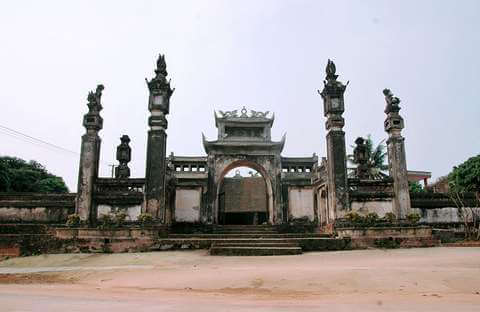
Do Nghia communal house
Do Nghia communal house is located on a high mound of Do Nghia village (Son Vi commune, Lam Thao district, Phu Tho province), built around the late 17th and early 18th centuries, with typical architecture of Doai land. The communal house worships Dai Hai Long Vuong at the same time as Tan Vien Son Thanh serving the Hung Vuong dynasty. The communal house has a total area of 4,636m2, the architecture is in Dinh style. The communal house gate consists of one main door and two side doors. The main gate is arched, decorated with decorative motifs, frills, and artistic patterns. In the communal house, there are many very valuable artifacts such as: bowl-shaped palanquin (artistic decoration of the Le Dynasty in the 18th century), literary palanquin (artistic decoration of the Nguyen Dynasty), a set of halberds, 3 trays, and an embossed literary stand. A dragon flanks a moon face, a base carved with the image of a Dragon saddle, a bench decorated with holes in the shape of a dragon, a turtle, a phoenix, a jade genealogy of 16 ordinations from the Le Canh Hung to the Nguyen dynasties... As a unique artistic architectural work, an exemplary image of traditional national architectural style, Do Nghia communal house has been recognized as a national historical and cultural relic according to Decision No. 1539 dated January 27. December 1990 SOURCE: Electronic Information Portal of Ministry of Culture, Sports and Tourism
Phu Tho 3611 view
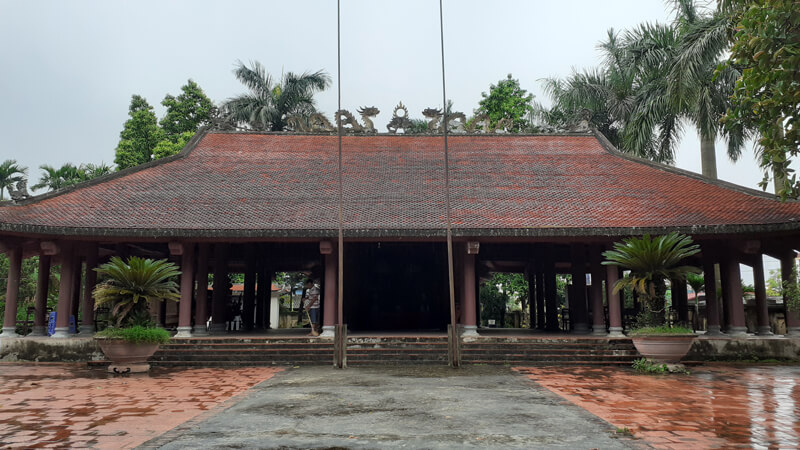
Phuc Thanh Pagoda
Phuc Thanh Pagoda is located on Ngoc Phac Mountain, on the right bank of the Red River. The pagoda currently has two buildings: Thieu Huong and Thuong Dien. According to the stele erected at Thieu Huong Court, Phuc Thanh Pagoda was built in 1145, during the reign of King Ly Anh Tong, in the reign of Dai Dinh. The pagoda was built by Mrs. Phung Thanh, Mrs. Le Thi Xuan Lan, a descendant of King Le Dai Hanh and the fourth wife of King Ly Than Tong. The pagoda is associated with heroic historical events, an example of resilient, indomitable fighting and the noble sacrifice of the daughter of the homeland of King Hung in the fight against the Southern Han invaders. That was the female general Princess Xuan Nuong, a talented general during the uprising of Hai Ba Trung. In the pagoda, there are still many precious artifacts such as the statue of the Monsignor, the statue of Guan Yin Buddha, the statue of the Earth Mother, the statue of the Holy Mother Le Thi Xuan Lan... and some stone relics dating back to the Ly Dynasty. High sculptural value is the stone stele of the 9th year of Chinh Long Bao Ung (1171), the stone for the base of the column, and the stone incense bowl. These relics are rare carvings remaining today. They bear the mark of stone carving art of the Ly Dynasty, expressing the concept of belief and the desire for a peaceful and happy life. SOURCE: Phu Tho NEWSPAPER
Phu Tho 3449 view
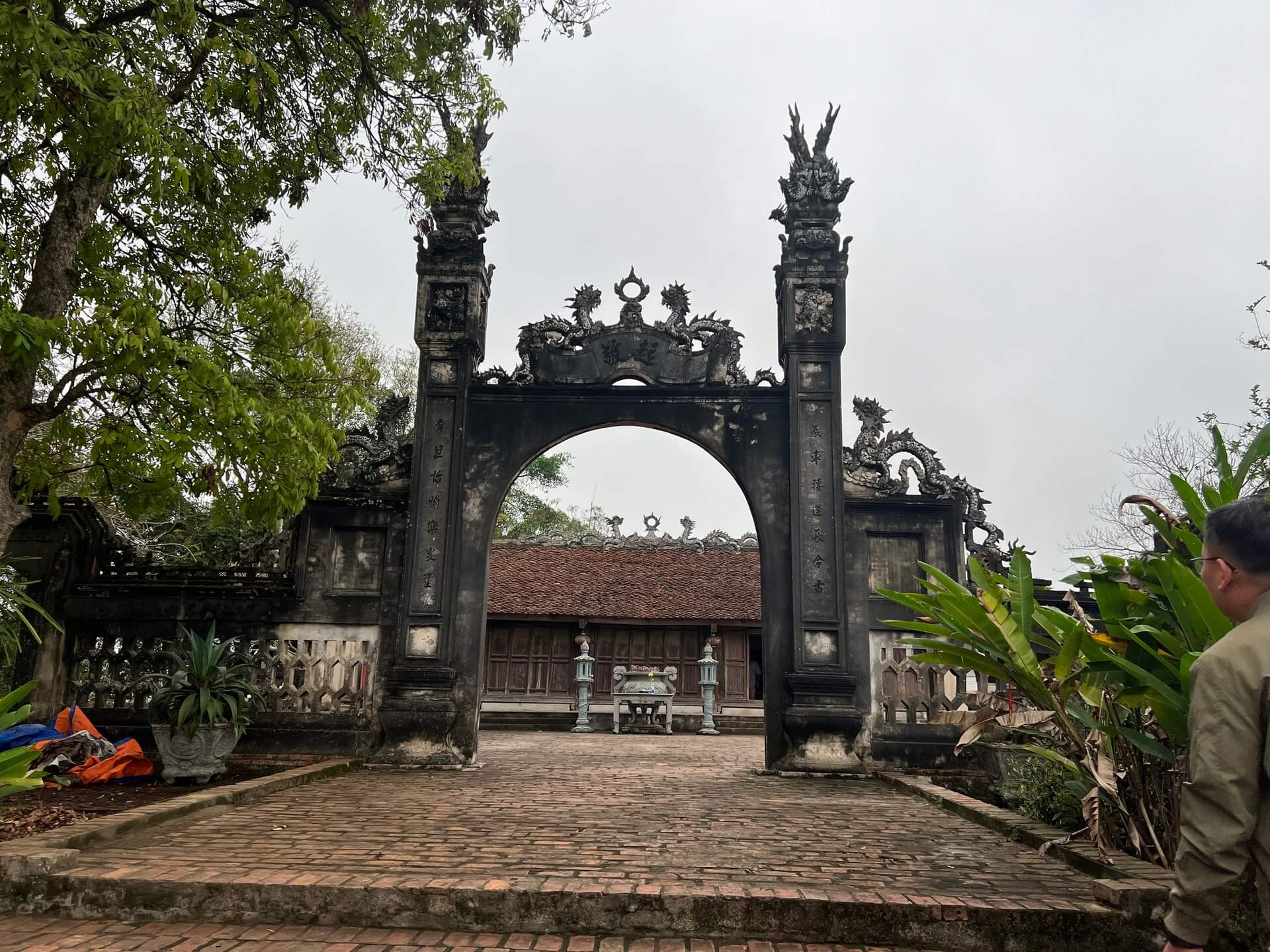
Notre Dame Temple
Notre Dame Temple (Huong Non, Tam Nong, Phu Tho, Vietnam) is a place to worship Princess Xuan Nuong - who had great contributions in the uprising at the beginning of the common era. She was appointed by Trung Vuong to the position of General of the Left General and Counselor when the Han Dynasty sent Ma Vien to invade our country again. She and her husband, Mr. Thi Bang, fought bravely against the invaders and both heroically sacrificed their lives. Legend has it that the place where the Lady's temple is now is the place where insurgents gathered and was also the place where she died. Admired by her merits, the local people built a temple and she was awarded the title of Duc Ban Canh Dong Cung First Eight Vicious Princess Xuan Nuong. SOURCE: Central Agency of the Communist Party of Vietnam
Phu Tho 3488 view
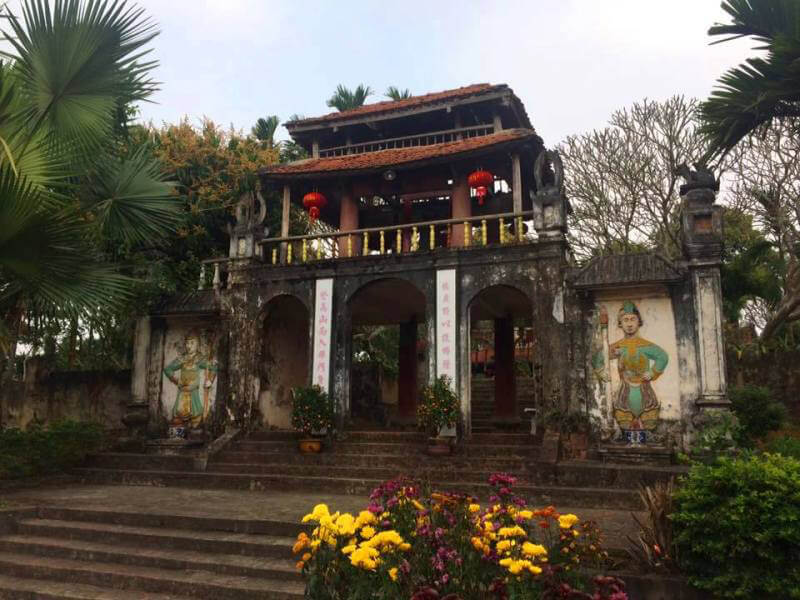
Bong Lai Pagoda
Bong Lai Pagoda (Xa, Ha Thach, Phu Tho, Vietnam) was built on a hill shaped like an elephant. From here you can see all four directions. Bong Lai Pagoda faces southwest, overlooking the Red River. Approaching Bong Lai Pagoda, right from the Red River dyke, we can admire a "Bong Lai fairyland" island in the middle of green rice fields, nearby is a church and ancient houses looming behind the leaves of ancient trees. , floating in the blue sky. The pagoda has beautiful architecture, in the middle of the highest beautiful hill in the area, like a link between heaven and earth, between yin and yang. From the dike to the pagoda, we have to climb a long slope to reach the Buddha's door. A cool, soothing atmosphere of frangipani flowers and ancient foliage creates a feeling of relaxation and calm. According to the epitaph, Bong Lai Pagoda during the Le Dynasty had a foreign interior-style architecture, including 36 compartments, symbolizing 36 hamlets of Ha Thach village. Experiencing the events of social history, the massive Bong Lai Pagoda gradually faded into oblivion. Up to now, the architectural layout of the pagoda is arranged as follows: Outside the pagoda is a redone three-entrance gate (the old three-entrance gate was demolished in 1953) from the gate follows a straight path to the 200m2 red-tiled pagoda yard, on the left. The yard is a newly built 3-room house, with a row of stone steles on the right side. The main architecture of the pagoda consists of two nail-shaped buildings, built on the highest ground. The 5-compartment frontage is 14m long, 3.1m wide, newly built over 20 years ago, the architectural structure is in the style of hitchhiking with walls and pillars. The second building has a 5-compartment upper palace structure, 13.5m long, 8.7m wide. The truss structure of this building includes the first beam and the roof supporting pillars. The upper palace of Bong Lai Pagoda remains relatively intact with its old architectural components. There are 20 large and small wooden columns in total, each one is 3.6 m high and 1.25 m in circumference; The sub-column is 2.5 m high, 1.0 m in circumference; The column body is painted red and painted with a scrolling dragon image. Notably, there are still two rafters from the 17th century, a major restoration during the Chinh Hoa period. In particular, in the pagoda there are many pillar footrests, made of fine-grained green stone, square with each side 0.4 m, on the surface is carved a two-layer lotus flower, each layer has 18 petals, the innermost circle is the place for contact with the base of the column. These are millstones from a major restoration in the 17th century. SOURCE: ENGLISH ONLINE
Phu Tho 3717 view
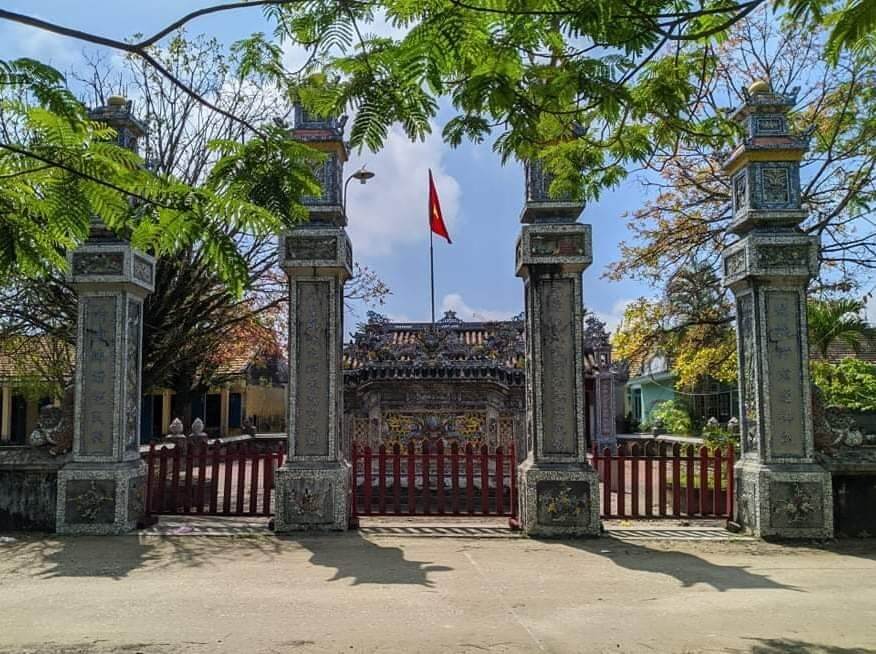
Dinh Quy Lai
Quy Lai is an ancient village in Thua Thien Hue. Since its founding, it has gone through many ups and downs of history and natural events, but with a spirit of hard work and a steadfast bravery in the face of challenges. With changes in nature and society, Quy Lai people have created a fine cultural tradition, along with many other cultural values, those cultural values are crystallized into Quy Lai Communal House, which has been and continues to be. promote a prosperous, happy, rich and beautiful life Quy Lai people today. Quy Lai Communal House belongs to the Nguyen folk architecture line, more or less inheriting the Northern folk architecture line. Studying Quy Lai Communal House, we see the inheritance and promotion of the techniques and fine arts of our ancestors. under new geographical conditions, natural environment, and humanity. The earliest Sino-Nom document mentioning Quy Lai Communal House is the Hoi Dinh newspaper about the renovation of the two God Emperor temples and the reclamation, due to long-term damage, dated February 22, the 2nd year of Tu Duc (ie the 26th day of the 19th century). March 1849). We can surmise that Quy Lai communal house was built around the beginning of the 19th century. Since then, the communal house has undergone many restorations and repairs, including a major restoration, recorded in Han Nom documents kept in Hanoi. The village's coffin was restored in 1937 (the 11th Bao Dai). Quy Lai communal house relic was recognized as a national relic according to Decision No. 43/2005-Decision/Ministry of Culture and Sports dated January 18, 1988 of the Ministry of Culture and Information (now the Ministry of Culture and Sports). Sports and Tourism). Source: Thua Thien Hue Electronic Information Portal.
Hue 3177 view
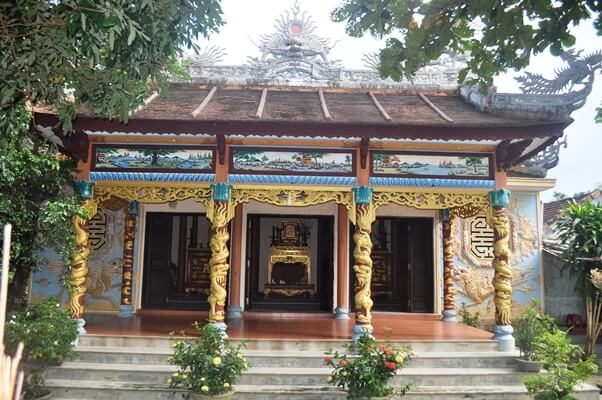
Cluster of communal house and pagoda relics in Thuy Duong village
Next to the system of mausoleums, citadels and temples of the Nguyen Dynasty. Today, in Thua Thien Hue in general and in the suburbs of the capital, many ancient architectural works are still preserved. Among them is a system of clusters of architectural and artistic relics: communal houses and pagodas in Thuy Duong village. The cluster of architectural and artistic relics: Communal house - pagoda of Thuy Duong village includes the following main works: Communal house and pagoda of Thuy Duong village, Dong Hai pagoda, Nam Son pagoda. The system of relic clusters has the architectural style of the Nguyen Dynasty and is also a system of communal houses and village pagodas - a fairly typical village cultural feature remaining on the land of Thua Thien Hue in general and Thuy Duong commune in particular. Therefore, the appearance and formation of the cluster of architectural relics: Communal house - pagoda in Thuy Duong village is evidence proving the formation of Thuy Duong village under the Nguyen Dynasty. This is a system of communal house - pagoda relics containing all the main structural elements of communal house - village pagoda in Hue. Everything is blended and intertwined with each other in both architectural level and style, from the patriotic tradition of national unity and the beauty of traditional Dharma. Communal house - pagoda in Thuy Duong village with over 200 years of existence in an Agricultural village, it is the symbol and strength of a village, a place to worship gods and ancestors, and a place for villagers to meet and worship. Ceremonies and festivals share spiritual communion and strengthen the strong bond between people in their ancestral homeland. From this village communal house and pagoda, people are positioned for a responsible life not only for each individual and family but also for the whole community, in harmony with the love of neighbors, continuing traditions in the present. The communal house and pagoda of Thuy Duong village with its unique architecture reflects the close relationship in the overall architectural works of the Nguyen Dynasty of the ancient capital of Hue in general and Buddhism in particular, from great landmarks such as Thanh Duyen Pagoda, Tu Dam pagoda to small scenic spots (village pagodas). The communal house and pagoda of Thuy Duong village was recognized by the People's Committee of Thua Thien Hue province as a national historical and cultural relic according to Decision No. 05/1999/Decision-Ministry of Culture and Sports dated January 12, 1999. (now the Ministry of Culture, Sports and Tourism). Source: Thua Thien Hue Electronic Information Portal.
Hue 2950 view