
 vn
vn en
en ja
ja ko
ko zh
zh


Beating the Heat in Phong Nha - Ke Bang: Soaking in the Breathtaking Mountain and Jungle Scenery
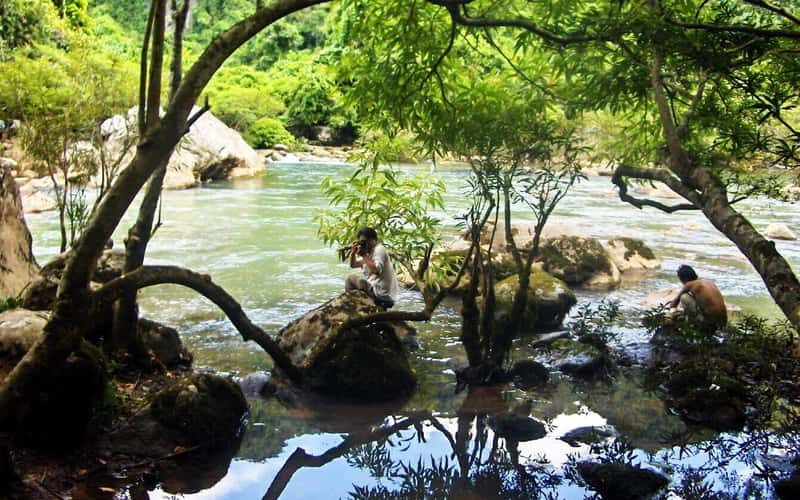
While Phong Nha - Ke Bang is renowned for its majestic caves, the region offers so much more. Beyond these incredible subterranean wonders, it truly captivates visitors with its sprawling pristine forests, refreshing waterfalls, and a variety of thrilling nature exploration journeys.
Summer in Phong Nha - Ke Bang
Dozens of non-cave tourist routes and destinations in Phong Nha - Ke Bang are perfect for travelers who love exploration and adventure during the hot summer months. These include the Botanical Garden, Gio Waterfall, Ozo Park, Survival Valley, and the cypress forest.
Beyond the nearly 450 large and small caves that have been discovered and explored, Phong Nha - Ke Bang National Park (Quang Binh) also boasts many other captivating attractions and routes.
If you're a traveler who loves exploring primeval forests, admiring limestone mountain landscapes, or wading through crystal-clear streams and cascading waterfalls, often connected to various caves, then head to the forest region of Doong Village, En Cave, and Khe Ri. You'll have some of the most unique experiences of your life. This area offers the most diverse landscapes, featuring low and medium-sized mountains on rock formations, dense forest vegetation, a village of ethnic minorities, and stunning karst mountain and cave scenery.
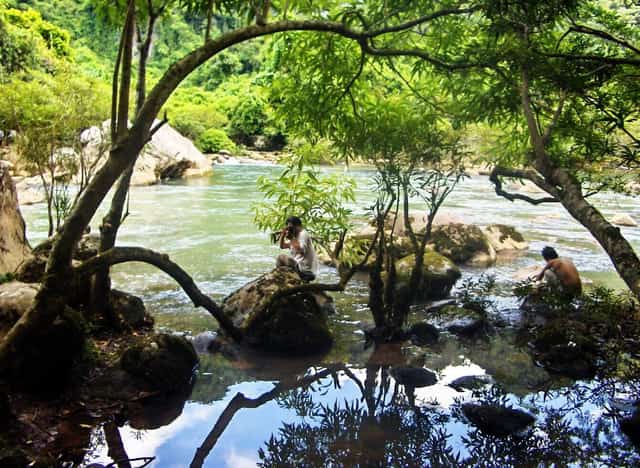
Mooc Spring landscape
Following the Ho Chi Minh Trail (Western branch) from kilometer 39, travelers will trek for about two hours through the deep forest to Doong Village, a secluded settlement nestled within the core zone of Phong Nha - Ke Bang National Park. Along the way, visitors may feel a sense of awe and trepidation due to landslide-prone sections with sheer cliffs, hundreds of meters high and deep on both sides, creating a truly spectacular landscape.
On the way to Doong Village, visitors might spot various animals like the red-shanked douc langur, civets, pig-tailed macaques, and red-faced monkeys frolicking beneath the dense canopy. You'll also see ancient trees with trunks so wide it would take several people to embrace them. This area is home to a unique collection of fruit trees, including wild mangosteen, Baccaurea ramiflora, star apple, black canarium, white canarium, and other local wild fruits.
During fruit season, visitors can enjoy fresh wild fruits, picked by hand, right on the spot after hours of trekking over steep rocky slopes and wading through deep streams. The Doong forest region is a flat valley with pristine forests, home to many rare species of flora and fauna. Doong Village, with nearly 20 households, is also the only village of the Bru - Van Kieu ethnic minority living within the strictly protected core zone of Phong Nha - Ke Bang National Park. Stopping in the village, visitors can experience the wild, rustic life of the local people amidst the mountains and forests.
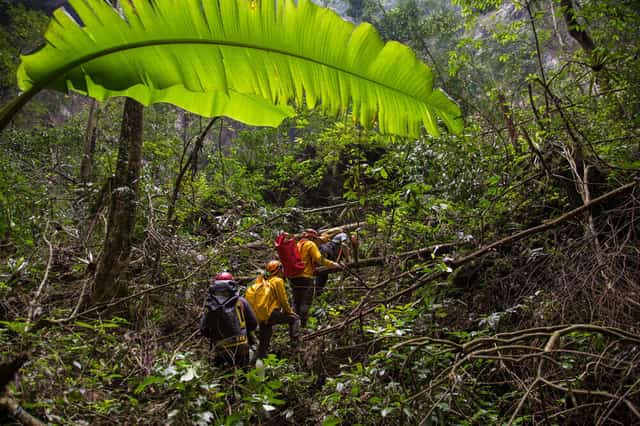
This Doong forest area was once home to gaurs (wild cattle), which is why it's also known as Hung Bo Tot (Gaur's Valley). There's an ancient gùa tree with a trunk so massive it would take 12 people to embrace it, estimated to be over 1,000 years old. The elevation of this region is over 1,000m, with an average year-round temperature below 25°C. Many sections of the multi-terrain, winding roads are spectacular and could be developed for international-level mountain biking. In many flat areas of the forest, on the karst (limestone) fields, impressive, oddly shaped solitary rock formations emerge. The sheer limestone cliffs, narrow gorge-like valleys, and small caves all add to the allure for adventurous explorers.
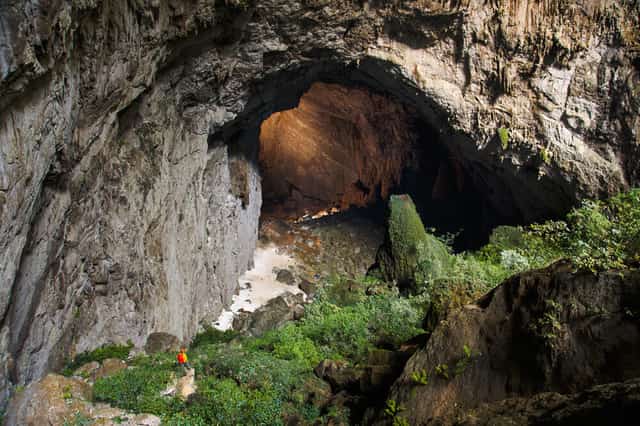
As visitors traverse this region, they'll find flat paths winding beneath the canopy of the primeval forest in Rao Thuong Valley, offering a truly relaxing experience after hours of mountain trekking. Here, numerous flat alluvial plains have been formed by rivers and streams. Rock terraces stretch along the mountain slopes and stream banks. There are also small caves whose entrances are right at the water's surface, tucked under rock overhangs, or submerged beneath the water amidst lush vegetation.
Mr. Cao Xuan Chinh, former deputy director of Phong Nha - Ke Bang National Park, once exclaimed: “It's so beautiful it takes your breath away when you come to this region. If I had a tent and a bag of rice, I would stay here forever.”
This area is also home to En Cave, which serves as the gateway to Son Doong Cave – currently the world's largest cave. In autumn, tens of thousands of swifts often take refuge here. The cave is located in the 'diving water' section of Rao Thuong Stream. It's called 'diving water' because when the river water reaches this point, it suddenly plunges and disappears into the earth, as if the current has been swallowed.
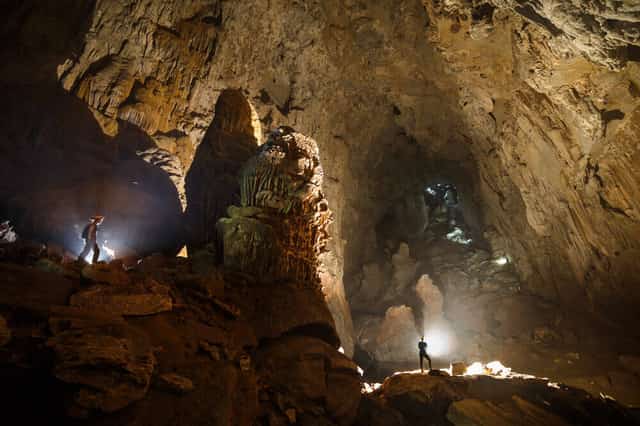
En Cave was first surveyed in 1996 by British cave explorers. The cave is over 1.6km long, with ceilings reaching 100m high in some places and a maximum width of 170m. Reaching this cave from the Ho Chi Minh Trail (Western branch) requires a 12-hour trek and 4 hours of wading through streams. Therefore, visitors must camp overnight in the forest before returning to their starting point.
After exploring the forest region and En Cave, visitors will proceed to the Khe Ri water cave area, situated along a stream in the southern strictly protected zone within the core of Phong Nha - Ke Bang National Park. The cave system spans over 19km in total, with ceilings reaching up to 120m in its highest sections. Khe Ri Stream originates from limestone mountain peaks, thousands of meters high, and flows powerfully into the cave entrance. Water from the source enters various cave mouths on the mountain face, converges in the main Khe Ri system, then connects to En Cave, and subsequently plunges underground to flow into the Phong Nha river system.
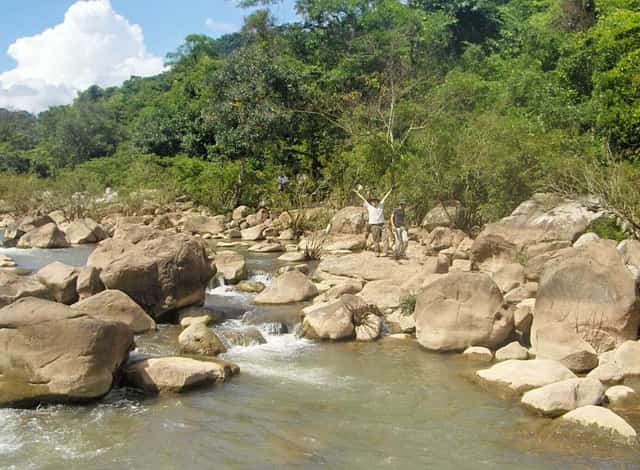
The path into the cave involves many winding sections with deep pools and numerous small, dangerous rock formations. After extensive trekking and climbing, visitors will need to swim through many parts of the cave, then squeeze through narrow rock passages. There are also deep water channels within the cave that offer a thrilling experience for adventurers.
The terrain in this forest region is ideal for adventure tourism, combined with landscape exploration and experiential travel. According to a survey by the University of Natural Sciences (Vietnam National University, Hanoi), the Doong Village, En Cave, and Khe Ri area offers all levels of adventure tourism, from the lowest to the highest. The section from the Ho Chi Minh Trail (Western branch) to En Cave is rated as danger level 1, primarily testing visitors' endurance. The section from the back entrance of Khe Ri Cave, extending 1km deep, is rated as danger level 2. The remaining sections are assessed at danger levels 3 and 4. The final stretch requires traversing tens of kilometers of treacherous paths across rocky mountains, rivers, streams, and deep caves.
Here, visitors' courage and physical endurance will be tested as they face darkness, steep and slippery rock walls and stalactites, or precarious rock slopes in collapsed areas, with deep, dark gorges directly below. Travelers will also need to swim through nearly one-third of the route in icy mountain water, beneath roaring waterfalls churning with white foam.
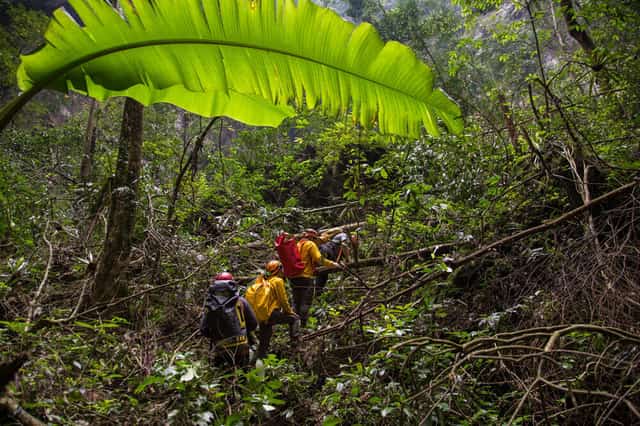
During the hot summer, visitors to Phong Nha - Ke Bang National Park will fully enjoy the cool air of the mountains, forests, rivers, streams, and lush greenery. Alongside this, they'll gain unforgettable 'conquests' of exploration and experiences that will last a lifetime.
In Quang Binh, visitors can also explore many other famous historical sites, such as:
1. Hoang Phuc Pagoda
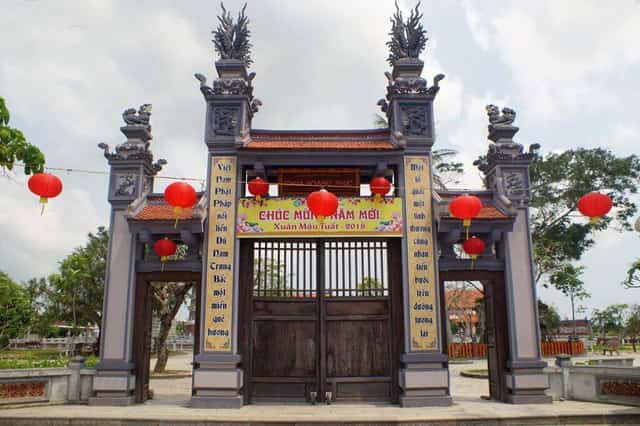
Hoang Phuc Pagoda, originally known as Tri Kien Hermitage and Kinh Thien Pagoda, and commonly referred to by locals as Tram Pagoda or Quan Pagoda, is located in Thuan Trach ward (now My Thuy commune), Le Thuy district, Quang Binh province. With over 700 years of history, Hoang Phuc Pagoda has endured and flourished through numerous renovations and reconstructions. In 1609, Lord Nguyen Hoang rebuilt the pagoda on its old foundation and named it Kinh Thien. In 1716, Lord Nguyen Phuc Chu visited the pagoda, ordered its renovation, and bestowed two horizontal plaques inscribed with “Kinh Thien Tu” and “Vo Song Phuc Dia,” along with five pairs of couplets to be hung in the pagoda.Hoang Phuc Pagoda
2. Da Deo Pass
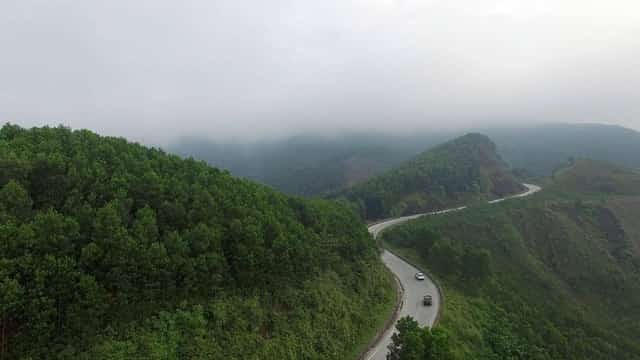
Da Deo Pass is located on the legendary Eastern branch of the Ho Chi Minh Trail, deeply intertwined with Vietnamese history. The pass stretches 17km through Thuong Hoa commune, Minh Hoa district, Quang Binh province. It's called Da Deo Pass because it winds across the summit of a limestone mountain range over 10km long.Da Deo Pass
3. Nguyen Huu Canh Mausoleum
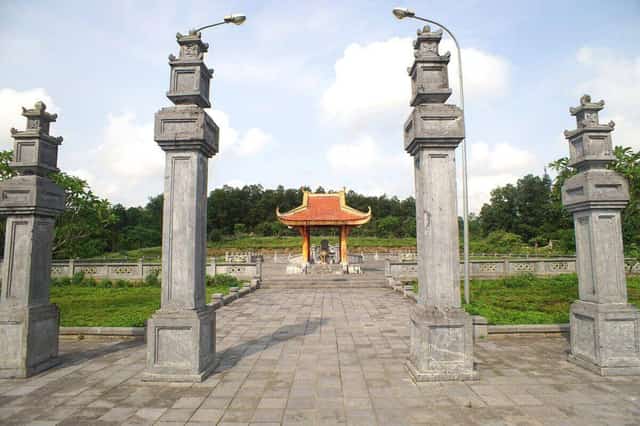
Nguyen Huu Canh Mausoleum is situated on a high, airy hill amidst the An Ma mountain range in Truong Thuy commune, Le Thuy district. Nguyen Huu Canh was a high-ranking official who made significant contributions during the Nguyen Lords' era, fighting invaders, expanding territories, and shaping Vietnam's unified national borders.Mausoleum of Nguyen Huu Canh
4. Dong Hoi Ancient Citadel
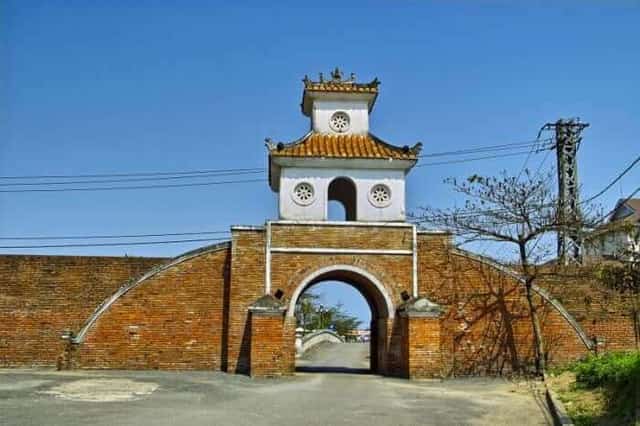
Dong Hoi Ancient Citadel is part of the overall military historical relics of Dong Hoi from the Trinh-Nguyen civil war period. It was built on a strategically vital piece of land along the trans-Vietnam route from North to South. With its advantageous geographical location, bordering the Nhat Le River and estuary to the east, it served both as a military supply point and helped to halt enemy naval advances. This site has marked many important historical events, symbolizing the victory of the nine Nguyen Lords in their northern expansion, bringing an end to 200 years of civil war.Dong Hoi ancient citadel
5. Trung Thuan War Zone
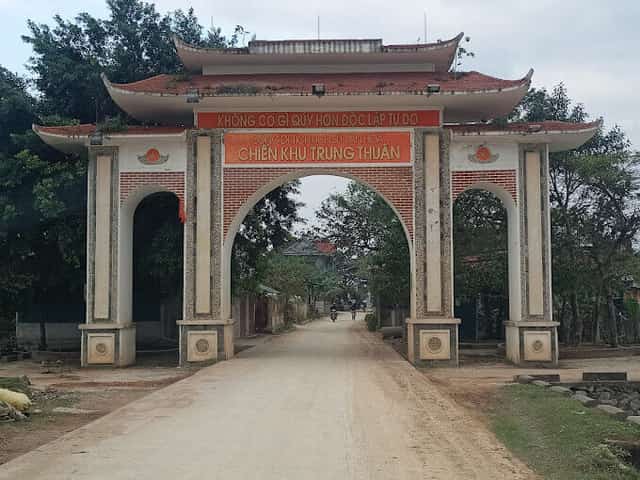
Trung Thuan War Zone is located in a semi-mountainous area within the communes of Quang Luu and Quang Thach, Quang Trach district, approximately 5 km west of Ba Don town. Once a crucial revolutionary base for the military and people of Quang Trach during the resistance wars against French colonialism and American imperialism, Trung Thuan War Zone has become a heroic historical testament and a source of pride for the local residents.Trung Thuan War Zone
Quang Tri 5786 view
Update day : 14/04/2024
Source : Du lịch TP Hồ Chí Minh .vn Affiliate links


Monuments close by
See all
Trung Thuan War Zone
Trung Thuan war zone is located in the semi-mountainous area of Quang Luu and Quang Thach communes, Quang Trach district, about 5 km west of Ba Don town. Once an important revolutionary base for the army and people of Quang Trach during the resistance war against the French colonialists and American imperialists, Trung Thuan war zone has become a heroic historical testimony and the pride of every person. people around here. Trung Thuan War Zone is a national historical relic site in 1995. The war zone is located on the area of two communes, Quang Luu and Quang Thach. However, the main area still belongs to Quang Thach commune. The ancient Trung Thuan war zone was a valley surrounded by many high mountains and dense forests in a U shape. In the war zone, there was Chop Chai peak, nearly 1,000m above sea level, which became an ideal "observatory" for the soldiers. the whole region. In small hamlets of Trung Thuan such as Duong Khe, Ha hamlet, Xuan Vuong, Kim Thanh, Tam Da, Trung Chinh, Tien Mieu, Dinh Cu, Phu Luu, Van Tap... Archaeologists have discovered many Archaeological artifacts such as: Phu Luu bronze drums, Dong Son type I bronze drums, bronze fish hooks, bronze axes and traces of Lam Hamlet ruins. Trung Thuan during the Trinh - Nguyen conflict period was a large base of the Trinh army north of the Gianh River. Dai Don base (Trung Thuan) along with Roon station and Thuan Bai station were important strategic defense lines of the Trinh army. In the north of Gianh River, the remaining vestiges are Tau Voi well, Vong Bai island... During the Can Vuong period, Trung Thuan was the base of Le Truc's insurgent army in the Can Vuong movement against the French in Quang Binh. Trung Thuan is an important base in the entire Can Vuong base system such as Huong Son, Huong Khe (Ha Tinh), Quy Dat, Khe Ve..., the remaining vestiges are Bai Tap, Bach Thach, Linh Than, Fish pond, Grinding stone slot, Tien Mieu hamlet, Xuan Vuong hamlet. During the resistance war against the French colonialists, the Trung Thuan war zone was not only the place where the District Party Committee, the Administrative Committee and the headquarters of Quang Trach district worked, but also the place where they trained and prepared the uprising forces to seize power. power and additional forces to jointly defend Vo Xa to seize power in Dong Hoi town in August 1954. During the resistance war against America to save the country, Trung Thuan was the rear base of the B70 Corps of the Vietnamese People's Army. This is a transit point in the Ho Chi Minh road system to support human and material resources for the struggle to liberate the South and unify the country. Due to its important role, in 1968 and 1972, the Trung Thuan war zone was heavily bombarded by American aircraft. Local soldiers and people sacrificed a lot, however, with their stubborn will, that still did not shake the revolutionary spirit of the army and people here. With his important contribution, in 1971, Trung Thuan war zone was honored to welcome General Vo Nguyen Giap to visit and summarize the victory of Route 9-Southern Laos. Source: Quang Binh Newspaper
Quang Tri
8826 view
Rating : National monument
DOC MIEU MILITARY BASE
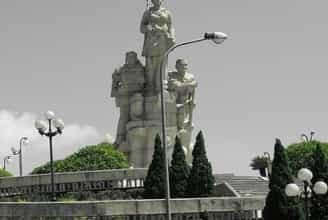
Doc Mieu military base is located in Gio Phong commune, Gio Linh district, Quang Tri province. This historical site is quite famous and is considered an "impregnable fortress" during the resistance war against the French colonialists and American imperialists. Located east of National Highway 1A, about 7km south of Hien Luong Bridge, Doc Mieu is a basalt hill located in a terrain area consisting of three zigzag slopes. This is also the defense line built by the US called Namara - the name of a general commanding the US - Puppet army, to prevent all reinforcements from the North and the Southern battlefield. Among them, Doc Mieu military base is the most important base in this line. Here, the enemy built a system of vaulted tunnels and mobile blockhouses made of concrete. Along with that is an artillery battle towards the north bank of the Ben Hai River, a control center to protect the fence, an armored patrol squad, and many American and puppet companies deployed. Surrounding the base are barbed wire fences with 12 layers of 3m high, on top is a fence with automatic mines, under the fence is a dense minefield hundreds of meters wide. In 1972, our army and people simultaneously opened fire, fired DKD grenades, A12 grenades, and rocket launchers, surrounding the Doc Mieu military base. After three consecutive days of attacks, the enemy had to flee on the night of March 31, 1972, leaving behind their posts, associates, and modern electronic fence system. Currently, our government built a victory monument to recognize the soldiers who fought heroically. At the foot are long, straight rubber hills, proof of the vibrant revival of life in this once-torn land. Doc Mieu military base relic has become a historical tourist attraction for tourists to visit every time they come to Quang Tri. This is not only a symbol of our nation's indomitable fighting spirit but also has profound educational significance for the country's future generations. Source: Quang Tri Newspaper
Quang Tri
8654 view
Rating : National monument

Truong Son National Martyrs Cemetery
Truong Son Martyrs Cemetery is located on Ben Tat hill, next to National Highway 15, in Vinh Truong commune, Gio Linh district; about 38km northwest of the provincial center (Dong Ha town); about 20km northwest of National Highway 1A (in Gio Linh district town). After the day of national reunification, the Party Central Committee and the Ministry of National Defense approved the project to build the Truong Son martyrs cemetery in Quang Tri province as a place to commemorate and honor the beloved children of the heroic homeland. Bravely sacrificed his blood on the Truong Son roads for the cause of national liberation. Construction of the cemetery began on October 24, 1975 and was completed on April 10, 1977. The construction commander is the 559th Division Command with the participation of more than 40 main army units and local soldiers. There is also a group of workers specializing in engraving words on stone stele in Hoa Hai commune, Hoa Vang district, Quang Nam province. Truong Son Martyrs Cemetery is where 10,333 graves of martyrs gather; has a total area of 140,000m2; Of which, the grave area is 23,000m2, the monument area is 7,000m2, the green tree planting area is 60,000m2, the lake area is 35,000m2 and the paved road network within the cemetery grounds is 15,000m2. The grave plot is divided into 10 main areas. Truong Son Martyrs Cemetery is the eternal resting place of the soldiers who sacrificed their lives on the Ho Chi Minh Trail during the anti-American era to save the country. This is the most massive, largest-scale, highly artistic gratitude project, expressing the deep remembrance, gratitude and secret honor of the entire Party, the entire army and the entire people of our country. with our beloved children in all parts of the country who spared no blood for the cause of the struggle to liberate and unify the country. On the occasion of the 40th anniversary of the founding of the Truong Son army (May 19, 1959 - May 19, 1999), the Party and State decided to upgrade and renovate Truong Son cemetery including many items: Entrance gate to Truong Son cemetery, road system and surrounding wall, command post model, local symbols, statue clusters, drainage system, internal electricity, planting trees around the cemetery and houses celebration, Fatherland Radio recognized... Up to now all items of the project have basically been completed. Truong Son Martyrs Cemetery today is not only the resting place of heroic martyrs but also a place of worship, a shining symbol of revolutionary heroism, of the spirit and will to fight for independence. independence and the desire for peace of our people. Truong Son Martyrs Cemetery is not only a place for martyrs' families, Party and State delegations, and local governments to visit and perform gratitude work, but also a place of pilgrimage. of people all over the country and international friends following the noble moral tradition of the Vietnamese people: when drinking water, remember its source. Currently, Truong Son Martyrs Cemetery has 24 officers and employees who regularly take care of, repair and welcome martyrs' families and domestic and foreign delegations to visit. Source: Office of the People's Committee of Quang Tri Province
Quang Tri
8411 view
Rating : Special national monument

Vinh Moc Tunnels
Vinh Moc Tunnels and Vinh Linh Tunnel Village System are magnificent underground military structures, born during the resistance war against the US to save the country. With the slogan "militarize the entire population, fortification of the entire region" Vinh Linh's army and people have dug trenches, with many functions: headquarters, logistics warehouses, schools, hospitals, living areas. of each family..., arranged throughout the residential areas, along the roads, along the fields, and on the coast, connected by a network of trenches instead of roads on the ground. From the end of 1965 to 1968 (according to incomplete statistics), the entire Vinh Linh district had 114 tunnels with a total length of more than 40km, a trench system of more than 2,000km and hundreds of other tunnels, which became "tunnel village" - appeared for the first time in the history of the Vietnam War, expressing the will to "not move one inch, not leave one inch" to stay and fight to protect the homeland and keep blood vessels open to the front line. Vinh Moc Tunnels and Vinh Linh tunnel village system are distributed throughout 15 communes and towns of Vinh Linh district, Quang Tri province, including: 1. Vinh Moc Tunnel (Vinh Thach). Belongs to Vinh Moc village and Son Ha village, Vinh Thach commune. Includes 13 doors (6 doors open to the hill, 7 doors open to the sea). Along both sides of the tunnel, there are small niches enough for 2 to 4 people. In the basement there is also a hall (capacity of 50 to 60 people), a place for meetings, watching movies, performing arts... and a number of other works such as: bulletin board, maternity home, 3 water wells, toilet, surgery station, infirmary, cooking kitchen (Hoang Cam kitchen). In addition to the underground tunnel and tunnel system, Vinh Moc Tunnels also has above ground works such as trenches, artillery emplacements, breakwaters, exhibition houses... 2. Hien Dung tunnel system (Vinh Hoa). Located in Hien Dung village, Vinh Hoa commune, including 2 tunnels: The tunnel of the People's Armed Police Command in Vinh Linh area is about 1,540m long, including 18 up and down doors and 15 ventilation wells. The People's Armed Police Information Tunnel in Vinh Linh area has 8 up and down doors and 10 ventilation wells. 3. Huong Nam tunnel system, Troong Mon - Cua Hang, Rooc village and Hai Quan tunnels (Vinh Kim). Including Huong Nam Tunnel: belongs to Huong Nam village, Vinh Kim commune. Troong Mon tunnel system: located close to the coast of Vinh Kim commune. Cua Hang Tunnel: The tunnel axis runs East - West, with 2 doors. Rooc village tunnel: belongs to Rooc village Naval Tunnels: These tunnels are located close to each other within a radius of 50m including: Naval Tunnel 1, Naval Tunnel 2, Naval Tunnel 3, Naval Tunnel 4. 4. Mui Si tunnel system, tunnel 61 (Cua Tung town). Including Mui Si Tunnel: located on the coastal road from Cua Tung to Vinh Moc Tunnel, in Thach Ban neighborhood, Cua Tung town. Tunnel 61: located on the road leading to Ben village, An Hoa 2 neighborhood, Cua Tung town. 5. Naval Tunnels (Vinh Nam). Located on a hill in Nam Cuong village, Vinh Nam commune. Vinh Moc Tunnels and the Vinh Linh underground village system are historical evidence of strength, indomitable spirit, the unyielding will to hold on to the land to defend the village, the unique creativity of the people's war, and a shining symbol of revolutionary heroism, greatly contributing to the victory of the resistance war against America to save our nation. With particularly typical values, the historical relics of Vinh Moc Tunnels and Vinh Linh Tunnel Village System (Vinh Linh district, Quang Tri province) have been ranked as special national relics. Source: Department of Cultural Heritage
Quang Tri
8309 view
Rating : Special national monument

Memorial House of General Secretary Le Duan
General Secretary Le Duan's memorial area is located on the banks of Thach Han River, in Hau Kien village, Trieu Thanh commune, Trieu Phong district, Quang Tri province. The memorial relic area of General Secretary Le Duan was recognized as a national relic on October 29, 2010. Le Duan (1907 - 1986) was a son of Bich La Dong village, Trieu Dong commune, Trieu Phong district, Quang Tri province. Born and raised in a land with a rich patriotic tradition, Le Duan soon became enlightened about the revolution. In 1928, he joined the Vietnam Revolutionary Youth Association and became one of the first class members of the Communist Party of Vietnam. A life of vibrant revolutionary activities is closely linked to the history of revolutionary struggle as well as the cause of national liberation and building Socialism of the Party and country. During 26 years, as First Secretary and then General Secretary, no matter what the circumstances, comrade Le Duan always upheld the steadfast spirit of communists, especially those who contributed to it. Your great contribution to the revolutionary cause of national liberation, national reunification, and bringing the whole country forward to build socialism initiated and led by the Communist Party of Vietnam. Le Duan deserves to be an outstanding leader of the nation, a steadfast soldier of the international Communist and workers' movements and an outstanding son of his homeland Quang Tri. "Relics of General Secretary Le Duan's memorial area", is the common name for a complex of relics including: Comrade Le Duan's memorial house - the living place of comrade's family since moving from Bich La Dong to Hau Kien is now a place to worship two of his parents and comrades in his hometown, Hau Kien village; The memorial house is a place to hold ceremonies and visit visitors; The additional gallery is a place to display artifacts and photos related to comrade Le Duan's life and career. The memorial house of late General Secretary Le Duan is located on an area of 2,000 square meters. Formerly the house and garden of Le Hiep's father. The house is made of wood, quite spacious. Through two brutal wars, the house was burned many times, and after liberation, only the floor remained. In 1976, to show respect and gratitude for his great contributions to the Party and State, the Party Committee and people of Trieu Phong district joined hands to help rebuild his family's house on the ground. old. The house is structured in the form of an old bank, consisting of 3 rooms and 2 wings, with a back house (lower house) 4.5m wide, 9m long, thatched roof, bamboo walls, plastered with mud and wood. Inside the house, furniture such as beds, beds, tables, altar cabinets, etc. were restored. At the end of 1977, the thatched roof was damaged and the District People's Committee replaced it with moldy tiles. From 1978 - 1985, it continued to undergo many repairs and renovations, replacing bamboo walls with pressed wood. In 1995, the Quang Tri Provincial Museum restored the house based on the structure of the old house (four or two wings, with a back house) 10m wide, 12m long, each room 2.5m wide, each wing 1m wide. .5m with awning. In 2005, the planning, construction, restoration and embellishment of the memorial site of General Secretary Le Duan was completed, and a number of artifacts and documents previously displayed in the memorial house were transferred to display at the Exhibition House. additional. The memorial house is still used as a place to worship his parents and comrade Le Duan. The memorial relic area of General Secretary Le Duan is a historical relic commemorating typical famous people of Quang Tri province, linking the youth and years of revolutionary activities of the comrade in his hometown with the existence and developing the revolutionary struggle movement of the Party Committee and people of Quang Tri in the two resistance wars against French colonialism and American imperialism. Source: Quang Tri Provincial Museum and Monument Management Center
Quang Tri
8176 view
Rating : National monument
Nearby tourist attractions
See all
Bao Ninh Beach
Coming to Bao Ninh, you will be immersed in an extremely open, wild and quiet natural space. You will only hear the whispering waves and the whirring wind in your ears without being crowded. like other key beaches. In addition, around are green coconut palms swaying in the wind and scenes of simple activities of people in Bao Ninh fishing village. You should come here in the early morning to catch the brilliant sunrise on the sea, when the first rays of the day begin to appear in the distance, the illuminated sea surface becomes beautifully iridescent. Or you can also walk barefoot on the beach in the late afternoon, when the sunset closes the day and the fishing boats return after a day at sea. Bao Ninh Beach is right next to Nhat Le beach, so if you want to visit Nhat Le, you just need to go through Nhat Le bridge to get there. In addition, standing on Nhat Le bridge and looking down at the water and sea surface of Bao Ninh is extremely beautiful and peaceful. After the morning watching the sunrise on the sea, you can also move to Bao Ninh square located right on the beach with extremely attractive and attractive entertainment activities. If you are lucky enough to come during the festival season, you can also witness the fishing and harvest festival that the fishing village people set up. Some attractions around Bao Ninh beach that you can visit are the ancient Citadel relics, Ca Ong temple or Mother Suot monument, Quang Binh Quan, General Vo Nguyen Giap's tomb or especially if there is one. Maybe Son Doong cave... Historical sites around this area will be an opportunity for you to gain more historical knowledge as well as social understanding, so you can learn more deeply about the war years. The arduous struggle of our army and people.
Quang Tri
7758 view
March to November

Mooc Spring – Bo Trach
Mooc Stream is located in Phong Nha Ke Bang National Park, about 60 km from Dong Hoi city. To get here you can follow the Ho Chi Minh Trail, the stream flows into the Con River towards the delta. At Khe Gat intersection, turn west and go about 5 km to Mooc stream. The stream is covered with vast green forests, the climate is cool, and the air humidity is high. Summer travel here is very suitable, you will feel like you are lost in a giant natural air conditioner. Mooc Stream in Quang Binh originates from a large lake about 80 - 90 square meters wide, downstream the stream flows into a large river. There are many rugged rocky beaches here, creating an interesting landscape. Along the stream, the shade of trees spread out into the middle of the stream like umbrellas above the water. Trees that grow well help retain water and humidity, making the air cool and fresh. Mooc Spring appears in the wild natural landscape of deep forest, tourists seem to be overwhelmed by the beautiful scene before their eyes. Each stream, tree branch and green grass is full of life, the tingling sound of nature blends with the sound of flowing water to create a lively harmony. On this S-shaped strip of land, there are places where people and nature can harmonize so closely. You can immerse yourself in the space of the mountains and forests to enjoy the feeling of relaxation, stretching all your senses to hear, to see, to feel the fragrance of life. Coming here, you can also participate in many entertainment activities, there are many thrilling games, requiring the player's flexibility and dexterity: Kayaking, hanging bridge, zipline... Sitting on a kayak, skillfully controlling the oar along the water flow to the fast-flowing sections, the player must brace themselves to keep the oar going through the strong current. The ticket price for kayaking at Nuoc Mooc spring is about 50,000 VND per session. Going on the suspension bridge is for those who are not afraid of heights. Take each step carefully on each wooden slat of the suspension bridge if you don't want to fall into the water. Not only are you careful, you also have to be very skillful to participate in this entertainment. Many rustic dishes are served here made from native ingredients: Stir-fried wild vegetables with garlic, grilled eel, grilled chicken, porridge soup. Sitting on thatched huts enjoying dishes brings a very new feeling. In the summer, Mooc stream truly becomes a wonderful ecological area, with cool spring water and fresh scenery. Going here with friends for a picnic on weekends or holidays will be a great idea, the wild nature will give you memorable photos. The tourist destination is quite new so everything seems "intact", seemingly separate from outside life. In addition, you can visit places near Mooc stream such as Chay river and Dark row. Dark Cave has deep underground streams flowing through creating air conditioning. Inside there are many multi-shaped stalactites and stalactites with almost no light, complete darkness. If you turn off the flashlight, it feels like everything is swallowed by darkness, the eyes are filled with suffocating blackness.
Quang Tri
7751 view
March to August
Phong Nha - Ke Bang National Park
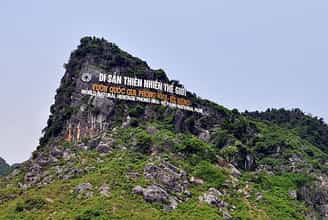
Famous as one of the world's largest natural wonders in Vietnam today, located in Quang Binh province and chosen by many tourists. This place not only contributes greatly to preserving nature, flora and fauna, but also creates an impressive tourist destination for tourists right from the first visit. Phong Nha Ke Bang National Park is located about 45 km from Dong Hoi city center. With a structure consisting of two main parts: Phong Nha cave and the majestic Ke Bang limestone mountain range many years old. Brings the feeling of being lost in a separate sky, both wild and imbued with the natural beauty of an attractive ecosystem. Located in Quang Binh province, a city in the Northern region, it has a tropical monsoon climate with two distinct dry and rainy seasons. To have a convenient trip to Phong Nha Ke Bang National Park, you should choose the time from April to August. At this time the weather is dry, little rain and beautiful sunshine, suitable for sightseeing and activities. interesting. As for the period from September to December, the weather is prone to rain and even storms. If you visit at this time, it will be quite disadvantageous to travel and cause many potential dangers. Besides, from January to March the high water season also causes disadvantages when visiting Phong Nha cave and other cave systems. Currently, choosing a hotel when visiting Phong Nha Ke Bang National Park is quite popular among tourists. Because this also affects the tourism process more or less. If you have questions about choosing a Quang Binh hotel, you can rest assured because this is currently a developed tourism province. When coming here, it is not too difficult to choose a hotel that suits the needs, interests and financial capabilities of visitors. To be more proactive about your time, you can choose to consult and book hotel rooms in advance at websites, or through the convenient Traveloka app. Referring to one of the attractions not to be missed when coming to Quang Binh national park, Phong Nha cave is known as "Thien Nam's first cave" with its majestic and wild beauty. After following the clear blue water, you will reach the cave entrance with a height of 10m, then proceed to explore the 8,000m long cave system, with 12 different large and small caves. Bringing unexpected experiences to visitors while visiting the national park. Through many changes, golden sand beaches, blue underground lakes and impressive stalactites have formed inside the cave. It all seems to create a vivid picture created by nature over hundreds of millions of years. To get in, you need to buy a ticket for about 120,000 VND/adult, free for children and rent a boat for about 550,000 VND/12-seat boat. Possessing an area of more than 40 hectares, the botanical garden is a diverse ecosystem and is also a conservation area not to be missed when visiting Phong Nha Ke Bang national park. Here, you can experience the process of Trekking to explore and check in to Thac Gia, Vang Anh Lake, and animal raising area. In addition, you can also visit the model exhibition house to see rare animals and plants. The ticket price to enter the botanical garden will be about 40,000 VND/adult and 20,000 VND/child. This promises to be an interesting and memorable experience for nature lovers who always want to discover the beauty and wonder of flora and fauna. Thien Duong Cave is known as the longest dry cave in Asia, with a total length of 31.4km, naturally formed in a limestone complex and surrounded by pristine, rich primeval forest. To reach the cave, you need to pass 524 wooden steps, then comfortably enjoy the cool atmosphere and the magical beauty of the impressive stalactites. Therefore, this place has become an indispensable tourist destination when coming to Phong Nha Ke Bang national park.
Quang Tri
8178 view
From April to August
Bai Da Nhay - Bo Trach district
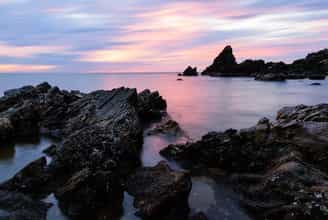
When coming to Quang Binh, you must definitely visit Bai Da Nhay - located at the foot of Ly Hoa pass in Thanh Trach area, Bo Trach district, Quang Binh province. With a long coastline, fine golden sand and blue sea water, it creates a beautiful "background" with no dead corners, suitable for virtual living. The best time to go to Quang Binh is from the first months of the year until May (according to the solar calendar). June, July, and August are quite sunny and hot, while September, October, November, and December are rainy and cold seasons. You can rent a motorbike in Dong Hoi to go to Da Nhay beach, which is also quite ok. From Dong Hoi City, you run towards Dong Hoi Airport and then go straight about 25 kilometers to get there. When you arrive, park your car at a convenient restaurant to eat lunch. The first impression that appears when coming to Da Nhay Beach is that the beach is clean with little trash, the sea water is clear and blue, and the air is cool. You walk a bit to reach the rocky beach. Attached is a set of stairs to climb to the top. Stand from above and look down to see the panoramic view of Da Nhay Beach. Rest assured that in Da Nhay Beach, there are many shops and restaurants close to the beach, with very reasonable prices, so you can eat and drink to your heart's content, always with fresh seafood. After finishing eating, you can rest in the hammocks under the hut and enjoy the cool sea breeze, which is also not a bad idea.
Quang Tri
7597 view
From January to December

Vung Chua – Yen Island
Located in Tho Son village, Quang Trach district, Quang Binh province and about 3km from National Highway 1A, Vung Chua - Yen Island is known as the resting place of the heroic general of the nation Vo Nguyen Giap. This area has an area of about 10 hectares and is located right at the foot of the majestic Ngang Pass. Vung Chua is a clear blue beach with long stretches of white sand and surrounded by a peaceful scene of endless green forests. Vung Chua faces the East Sea but is quite sheltered from the wind, so this place is said to be a land with a quite prime location. Yen Island is a small island about 1km from Vung Chua shore. If you go by boat, it will only take about 20 minutes to get here. Many people commented that Yen Island is like a screen emerging in the middle of the sea with the belief that this place will guard the land and sea, protecting human life. Vung Chua - Yen Island has now become a pilgrimage destination attracting many tourists to visit and burn incense to commemorate the heroic general every year. Local people have recounted that in the past this land was called Hon Nom based on the direction calculation. However, later a company brought the bird's nest here to raise it to exploit the bird's nest, so from here a lot of bird's nest came to live. The name Yen Island, Quang Binh, also came from there. So where does the name Vung Chua come from? According to local people, in the past there was a large pagoda in this area, but now through ups and downs of time, only traces of the pagoda's foundation remain, but the name Vung Chua comes from that. This area is also surrounded by three islands: Hon La, Hon Gio and Hon Nom, forming a three-legged triangle so it is quite airtight so ships often anchor when there is a storm. In addition to the tomb of General Vo Nguyen Giap, many people may still not know that on the island there is also an ancient tomb that has been passed down orally from people as the tomb of famous general Tran Dat, who had meritorious service in the Lam Son uprising against enemy from the North with Le Loi. After learning more about the history books left behind, we learned that the family of famous general Tran Dat was very famous in the area because there were many people who were awarded the title of marquis, duke or academician... However, the church they are currently in Thuan Bai village, Quang Thuan commune, Quang Trach district. So Quang Binh is honored to welcome two generals about 500 years apart to rest here. The grave of General Vo Nguyen Giap is located on the shore, at a 110m high point on Dragon Mountain, overlooking the sacred Yen Island, and the grave of famous General Tran Dat, who was instrumental in defeating the Northern invaders and saving the people, is also nearby. That area makes Vung Chua - Dao Yen more majestic.
Quang Tri
7933 view
From January to December
 AI Travelviet