 vn
vn en
en ja
ja ko
ko zh
zh











Dong Du village
Dong Du village, Nom name Goi village, located along the Red River, is a large village, later divided into two residential clusters, becoming two independent villages with their own communal houses, temples and pagodas. In the early 19th century, Dong Du was a commune consisting of two villages: Dong Du Thuong (Goi Thuong) and Dong Du Ha (Goi Ha) belonging to Dong Du canton, Gia Lam district, Thuan An district, Kinh Bac town (in the 12th year of Minh Mang - 1831, it was changed to Bac Ninh province).
In addition, a part of the population crossed the Red River to settle in Thanh Tri district, Nam Du village, now in Linh Nam ward (Hoang Mai district); At first, they lived based on their original village, so that village had the Nom name of Ba village.
Dong Du's land is large, there are many people (in 1928 the village had 1604 people, men lived in 6 borders), there were fields inside the dyke and land outside the dyke were very fertile, convenient for cultivating rice and growing vegetables. Among the plants of Dong Du, the most famous are mustard greens (especially mustard greens) and tapioca, tubers as big as a person's head. Dong Du is a place that provides winter vegetable varieties for a large area.
During the French colonial period, on the land of Dong Du village, the French colonialists established a plantation named after capitalist Marx Ty. People from all over came here to work for this plantation owner, and later established a hamlet, named Thuan Phuc.
The August Revolution of 1945 was successful, Dong Du (Upper hamlet and Lower hamlet) merged with Thuan Phuc hamlet to form a commune named Thua Thien in Gia Lam district, Bac Ninh province. In May 1961, the commune, along with other communes in Gia Lam district, was transferred to Hanoi city. In 1965, Thua Thien commune was renamed Dong Du as it is today.
During the Nguyen Dynasty, Dong Du village had two people who passed the Huong Tribute, Nguyen Huy Trinh (the first pass of the Nguyen Dynasty - the year of Ky Mao of Gia Long's reign, 1807), who worked as an official of the Ministry of Justice. He was instrumental in raising his grandson, Nguyen Tu Gian (from Hoa Lam village, now in Mai Lam commune, Dong Anh district, who passed the Hoang Giap exam (in 1844), who was one of the pillars of the Tu Duc court at the end of the 19th century. His son, Nguyen Huy Chieu, passed the Tan Ty exam during the reign of King Minh Mang (1821), served as Huu Thi Lang Ho, was appointed to the Cabinet, and was sent as an ambassador to China.
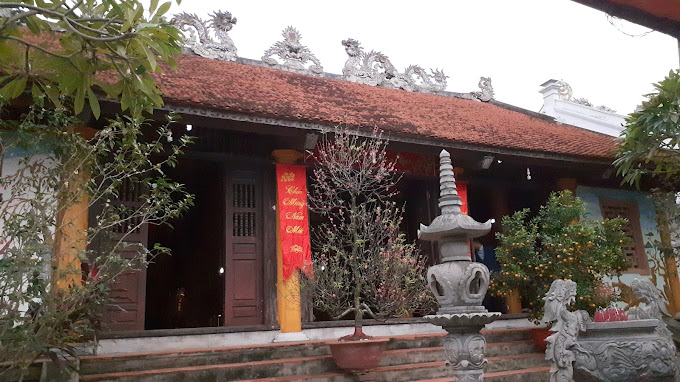
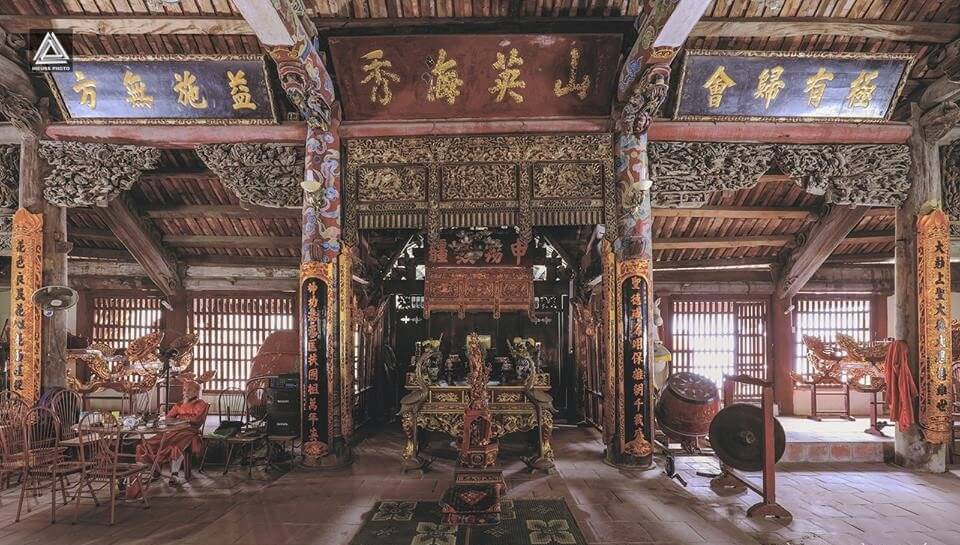
The Upper and Lower Dong Du villages all had communal houses in the past, but they were destroyed during the resistance war against the French and have only been restored in recent years.
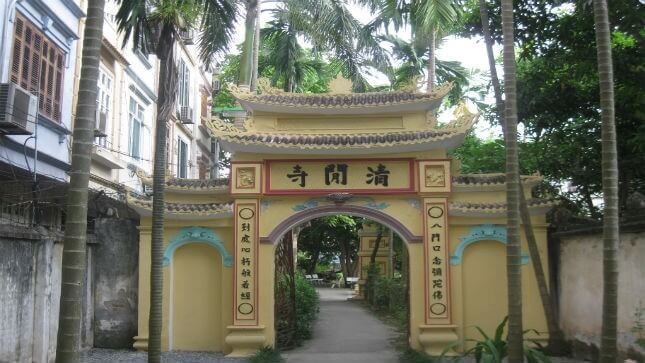
Both Dong Du Thuong and Dong Du Ha communal houses worship three tutelary gods: Cao Son Dai Vuong (brother and uncle of Tan Vien Son saint), Bach Da Dai Vuong - who helped Dinh Bo Linh suppress the rebellion of 12 warlords at the end of the 10th century, and Linh Lang Dai Vuong (son of King Ly Thanh Tong) - who had great contributions in the resistance war against the Song Dynasty in 1076 - 1077. Particularly, Thuong hamlet communal house also worships Khang Tri Dai Vuong, "Dong Nam". Northwest governs the great tutelary god" (this is either the tutelary god who governs a large area or the god who governs the moats around ancient citadels, but it is unclear why the village worships it like that). Both villages share the same Phu Quang pagoda located on the land of Ha village.
Dong Du village festival takes place from February 7 to 13. The festival begins with a ceremony to collect water from the Red River and process water from the river wharf to the communal house for offerings. Then there are games, the most unique are sword fights, boxing matches, and shield dances.
Before the August Revolution, Dong Du village's slavery was very heavy. Every year, each zodiac must have two people raising pigs to worship (one main farmer, one backup farmer), blowing 20 loads of sticky rice on February 11. The "reliant men" are slaughtered, classified as first, second, and third before being boiled. After the sacrifice is completed, they are divided among the fairies, subordinates, and dignitaries (first pig), the elderly from 55 years old or older (second pig), and the remaining children are divided among the men of the zodiac.
From 25/03/2026 - 31/03/2026